Category: Views

Essays and interviews. Interesting thoughts and musings on music

  • From Tin Pan Alley to TikTok: The Evolution of Pop into Jazz Standards


    Introduction: The Elastic Boundaries of the Jazz Canon

    Jazz, more than any other art form, thrives on reinterpretation. The very act of making a “standard” in jazz has never depended solely on composition, but rather on recomposition: the process by which musicians reimagine existing songs through improvisation, reharmonization, and rhythmic transformation. Historically, the so-called “jazz standards” were not born within jazz at all—they emerged from the popular music of their day. What we now regard as canonical repertoire—“All the Things You Are,” “Body and Soul,” “My Funny Valentine”—were, in their own time, the pop hits of Broadway and Hollywood.

    As jazz continues to evolve alongside contemporary culture, the question arises: which of today’s pop songs might, in decades to come, undergo the same metamorphosis from radio hit to bandstand staple?


    I. The Great American Songbook: Popular Music Reimagined

    When we examine the early to mid-20th century, the relationship between jazz and popular song is symbiotic. The composers of the Great American Songbook—Jerome Kern, Cole Porter, George Gershwin, Richard Rodgers—provided the raw materials for improvisation. These songs, often written for musical theatre or film, possessed a harmonic and melodic sophistication that lent itself to jazz reinterpretation.

    Take Kern’s “All the Things You Are” (1939): a tune from a Broadway musical (Very Warm for May) that became a harmonic playground for jazz musicians from Charlie Parker to Keith Jarrett. Or consider “My Favorite Things” (Rodgers and Hammerstein, 1959), whose transformation by John Coltrane in 1960 redefined not only the song but the modal jazz landscape itself.

    In these cases, the “popular” origins of the tunes were essential. Jazz musicians sought common cultural reference points—melodies that audiences recognized, yet which could be deconstructed and reborn through improvisation.


    II. The Second Wave: Pop Standards of the Late 20th Century

    By the 1960s and 1970s, the mainstream of popular music had shifted from Broadway to the recording studio. Jazz artists began turning to The Beatles, Stevie Wonder, Joni Mitchell, and later, Sting and Björk, for inspiration. Herbie Hancock’s “The New Standard” (1996) formalized this practice, featuring jazz renditions of pop songs by Don Henley, Nirvana, and The Beatles.

    Songs such as “Yesterday” and “Norwegian Wood” became as frequently reinterpreted in jazz as “Autumn Leaves” or “Misty.” The harmonic language of pop was evolving, but so too was jazz’s appetite for hybridization.

    This era revealed a critical truth: the “standard” is not a fixed category but a dynamic process of cultural negotiation. What makes a song a standard is not when it was written, but how well it can bear the weight of improvisation.


    III. Pop Songs of Today: The Future Jazz Standards?

    If we fast-forward to the 2020s, we find ourselves in a new musical ecology—one shaped by streaming algorithms and viral trends. Yet, even in this fragmented landscape, certain pop compositions display the structural and emotional depth that could invite future jazz reinterpretation.

    A few plausible candidates include:

    • Billie Eilish – “Happier Than Ever” (2021): Its gradual crescendo and harmonic shift from intimacy to catharsis echo the narrative arcs of classic standards. A jazz trio could easily explore its contrasting sections with dynamic improvisation.
    • Adele – “Someone Like You” (2011): With its timeless melody and clear harmonic motion, this song could function as the “Body and Soul” of the streaming era.
    • Bruno Mars – “Leave the Door Open” (2021): Already a nod to 1970s soul-jazz aesthetics, it could fit seamlessly into a future Real Book volume.
    • Taylor Swift – “Anti-Hero” (2022): Its introspective lyricism and chordal subtleties lend themselves to re-harmonization; imagine a slow swing or bossa nova rendition.
    • Jacob Collier – “All I Need” (2020): Though harmonically dense already, its rich textures and modulations invite jazz musicians to extend and reinterpret its layered complexity.

    In each of these examples, the potential for jazzification lies not only in harmonic sophistication but in emotional universality—an essential trait shared by both the Great American Songbook and contemporary pop.


    IV. Conclusion: The Continuing Conversation

    The jazz standard is not a relic of the past but a living tradition—an ongoing conversation between popular culture and improvisational artistry. As the sources of “popular” music shift—from Tin Pan Alley to Top 40 to TikTok—the jazz community continues to reinterpret the sonic vocabulary of the moment.

    Just as swing-era musicians once transformed show tunes into art music, the next generation of jazz artists will no doubt find inspiration in today’s pop anthems. The standards of tomorrow may well come from Spotify playlists rather than sheet music publishers, but the underlying process—the creative alchemy of jazz reinterpretation—remains timeless.


    In the end, the question is not whether pop songs can become jazz standards, but rather which songs will endure long enough, and resonate deeply enough, to invite the endless reinvention that defines jazz itself.


  • Grit, Grime and Groove. The Irreplaceable 55 Bar’s Legacy in Modern Jazz

    Grit, Grime and Groove. The Irreplaceable 55 Bar’s Legacy in Modern Jazz

    The recent closure of the 55 Bar marks the end of an era for New York’s vibrant jazz community and its underground live music scene. Known for its intimate setting and the free-flowing creativity it fostered, the 55 Bar had become an iconic landmark in the West Village. Despite its unassuming appearance as a subterranean dive bar next to the historic Stonewall Inn, the venue provided an indispensable space for musicians and fans alike, hosting a treasure trove of memorable performances over nearly four decades.

    Opened in 1919 as a neighborhood watering hole, the 55 Bar underwent several transformations before its ultimate reinvention as a home for live music in the 1980s. It was bassist Jeff Andrews who first pioneered the jazz scene there in the mid-’80s, and it wasn’t long before a host of iconic musicians made it their regular hang. The venue became synonymous with cutting-edge performances, particularly in the realms of jazz and fusion.

    The intimate nature of the space, coupled with a distinct bohemian charm, made it a haven for aspiring artists to take risks, experiment, and connect with fans and fellow musicians. It wasn’t unusual to see guitarists like Mike Stern, Leni Stern, Wayne Krantz, and Adam Rogers, along with saxophonists like Donny McCaslin and Chris Potter, gracing the stage on a given night. It was the kind of venue where the music spoke louder than any flashy presentation, and the patrons often shared an unspoken understanding that this was a place to experience something truly special.

    The 55 Bar was particularly revered by guitarists, who found the venue to be a perfect setting for showcasing their virtuosity and unique voices. As one writer pointed out, “Long before I ever visited the 55, I read about it, no doubt in Guitar Player and Guitar World, in connection with Mike Stern.” The club’s dedication to hosting a wide range of jazz and blues guitarists made it a special spot on the map for both musicians and fans who revered the craft. The performances were often marked by raw, emotional interaction between players, as well as a palpable sense of camaraderie, creating a deep connection between those onstage and the audience. It was a breeding ground for new ideas and an incubator for young talent.

    One of the most famous legacies of the 55 Bar was its role in cultivating the careers of musicians who would go on to achieve international acclaim. Perhaps the most notable example is when David Bowie recruited the members of his Blackstar band from the 55 Bar, recognizing the unique talents of saxophonist Donny McCaslin and guitarist Ben Monder. Such stories were common, as the 55 Bar became a place where both established musicians and newcomers could meet, collaborate, and push the boundaries of jazz music.

    Sadly, the 55 Bar’s final closure came in the aftermath of the COVID-19 pandemic, which forced the venue to shut down for 14 months. Despite a valiant fundraising effort involving prominent musicians like Chris Potter and Mike Stern, the financial strain was too great for the club to survive. The pandemic’s devastating effects on live venues across the world were especially felt here, where the venue had once been a bustling hub for musicians and listeners alike.

    For many, the loss of the 55 Bar represents more than just the closing of a club; it is the end of an important era in the jazz world. The venue had a reputation for being a true “musicians’ hang,” where musicians could experiment freely, learn from each other, and develop their craft in a supportive environment. Many a jazz legend passed through the club’s doors, and the space itself had become a character in the ongoing evolution of the genre.

    While the 55 Bar’s physical space is now gone, its legacy lives on in the countless musicians who performed there and the loyal fans who cherished the experience. The venue’s closure serves as a reminder of how fragile the world of live music can be, especially in the face of unforeseen crises. It also prompts reflection on the importance of maintaining intimate venues where musicians can take risks and audiences can experience the pure joy of spontaneous music-making.

    In the wake of this loss, the question arises: where else in New York City will the next generation of jazz musicians find a space like the 55 Bar, where they can hone their craft and connect with a community of listeners who understand the value of live, intimate performances? The 55 Bar will be sorely missed, but its impact on the jazz community is undeniable, and its memory will continue to inspire future generations of musicians who seek to create in the same spirit of spontaneity and innovation. Rest in peace, 55 Bar. You’ll never be forgotten.

  • London’s top 10 Jazz Venues

    London is home to a thriving jazz scene, with a variety of venues offering unique atmospheres and histories. Here’s a list of 10 of the best jazz venues in the city, highlighting their individual character and the vibe they provide:

    1. Ronnie Scott’s Jazz Club

    • History: Opened in 1959 by saxophonist Ronnie Scott, this iconic venue is a staple of London’s jazz scene. It has hosted legendary artists such as Ella Fitzgerald, Miles Davis, and the Rolling Stones.
    • Vibe: Intimate and legendary. The dimly lit club provides a cozy yet upscale atmosphere, making it the place for serious jazz enthusiasts and casual listeners alike. Expect world-class performances in a stylish setting with a touch of old-school glamour.
    • Atmosphere: Sophisticated yet relaxed, with a mix of loyal jazz fans and tourists looking to experience a piece of jazz history.

    2. The Jazz Cafe

    • History: Located in Camden, The Jazz Cafe opened in 1990 and quickly became a hotspot for live music lovers. It blends jazz, soul, funk, and world music, with performances from artists like Amy Winehouse and Erykah Badu.
    • Vibe: Vibrant and eclectic. It’s a lively venue where the energy is high and the crowd diverse. It’s more of a “club” vibe, with a focus on music and dancing, while still maintaining a dedication to jazz.
    • Atmosphere: Casual and energetic, it’s perfect for a night of dancing and enjoying contemporary jazz influences.

    3. The 606 Club

    • History: Founded in 1976, The 606 Club in Chelsea is a longstanding venue with a rich tradition of live jazz. The club has a reputation for presenting top-notch musicians in an intimate setting.
    • Vibe: Cozy and relaxed. It’s one of London’s hidden gems, featuring top-tier jazz musicians in a comfortable, low-key atmosphere.
    • Atmosphere: Warm, close-knit, and friendly, with tables surrounding the stage, creating a sense of connection between performers and the audience.

    4. PizzaExpress Jazz Club (Soho)

    • History: This iconic venue, located in the heart of Soho, has been part of the PizzaExpress brand since the 1970s. It’s hosted jazz legends such as Jamie Cullum, Wynton Marsalis, and Christian McBride.
    • Vibe: Laid-back and accessible. This venue combines great food with live jazz, offering a relaxed environment where you can enjoy a meal while listening to the music.
    • Atmosphere: Casual yet intimate. It’s a more informal experience compared to larger venues, with an emphasis on enjoyment and good company.

    5. Vortex Jazz Club

    • History: Founded in 1989 in Dalston, Vortex has a rich legacy in supporting both avant-garde and traditional jazz. It is known for being a hub for experimental and cutting-edge performances.
    • Vibe: Experimental and artistic. The venue has a slightly gritty feel, offering a more alternative jazz experience that attracts a passionate, local crowd interested in progressive jazz.
    • Atmosphere: Intimate and slightly raw, creating a more immersive, personal connection to the music.

    6. King’s Place

    • History: King’s Place opened in 2008 as a multidisciplinary arts venue and has quickly become a leader in London’s classical and jazz music scenes. It offers a modern, spacious environment for performances of all genres.
    • Vibe: Refined and modern. It attracts a more mature audience with its stylish, state-of-the-art acoustics and an emphasis on high-quality performances.
    • Atmosphere: Calm and sophisticated, making it ideal for a more relaxed evening of listening to jazz in a concert hall-style venue.

    7. The Bull’s Head

    • History: Located in Barnes, The Bull’s Head has been a popular jazz venue since the 1960s, offering live jazz nightly and hosting both local and international artists. It has a reputation for great acoustics and a loyal following.
    • Vibe: Traditional and unpretentious. This is a pub with an intimate, homely feel, where jazz blends with the relaxed atmosphere of a local watering hole.
    • Atmosphere: Welcoming and down-to-earth, with a mix of regulars and newcomers enjoying the music in a laid-back pub setting.

    8. Cadogan Hall

    • History: A former Methodist church, Cadogan Hall has become a prominent venue for classical music, jazz, and other genres since it opened in 2004. It is home to the London Chamber Orchestra but also hosts jazz performances, including a popular series featuring high-profile artists.
    • Vibe: Grand and elegant. With its classical music history and high-quality acoustics, it offers a more formal, concert-like experience compared to smaller venues.
    • Atmosphere: Cultured and serene, with an emphasis on professional-level performances in a beautiful, intimate hall.

    9. Royal Festival Hall

    • History: As part of the Southbank Centre, Royal Festival Hall is one of the UK’s most important cultural venues, hosting a variety of jazz performances since its opening in 1951. It is known for its wide range of jazz, from classic to contemporary.
    • Vibe: Majestic and expansive. This large venue offers a formal yet welcoming environment where jazz performances are held alongside other major events in the arts.
    • Atmosphere: Sophisticated and often lively, with a large and diverse crowd that creates an energetic yet polished experience.

    10. Southbank Centre (Purcell Room)

    • History: The Purcell Room, part of the Southbank Centre, is known for its exceptional acoustics and intimate vibe. It regularly hosts jazz performances, featuring both established and emerging artists.
    • Vibe: Intimate and artistic. With its small seating capacity, the Purcell Room feels like a private concert, offering an up-close experience with some of the most talented jazz musicians.
    • Atmosphere: Quiet and respectful, ideal for those who appreciate a more focused and immersive listening experience.

    Key Differences in Vibe and Atmosphere:

    • Intimate Venues (e.g., Ronnie Scott’s, 606 Club, Vortex Jazz Club): These offer a personal connection with the artists, often in cozy, small settings where the audience is close to the stage. The vibe tends to be warm, informal, and focused on the performance.
    • Larger Venues (e.g., Royal Festival Hall, King’s Place, Cadogan Hall): These provide a more formal atmosphere with top-tier acoustics and larger audiences. They are ideal for those who want a grander, concert-style experience.
    • Eclectic/Alternative Spaces (e.g., The Jazz Cafe, Vortex Jazz Club): These venues embrace a more diverse approach to music, offering jazz alongside other genres. The atmosphere is more relaxed, and the crowd is often more varied.
    • Casual, Pub-Like Venues (e.g., The Bull’s Head, PizzaExpress Jazz Club): These offer a blend of great food and live music, with a more laid-back, communal vibe.

    Each venue offers a unique angle on jazz, from intimate nights with local artists to grand performances by world-renowned musicians.

  • Glasgow Jazz: A Revolution in Four-Four Time

    Glasgow Jazz: A Revolution in Four-Four Time

    By Max Millar.

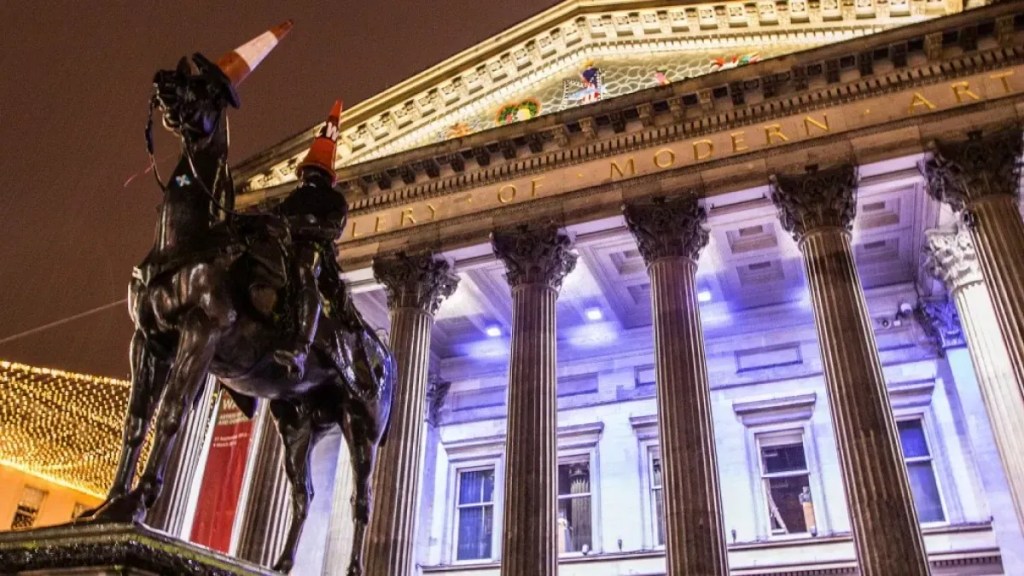
    Glasgow, the old industrial lion of the Clyde, once rumbled with the clang of shipyards and the murmur of political ferment. Now, its streets hum with a new rhythm, a syncopated heartbeat that speaks of the future while wearing the past like a sharp-cut suit. Jazz—Glasgow’s jazz—has found itself reborn, slinking out of smoky basements and into the wide arms of a younger, more eclectic audience. It is a revolution not with fists but with brass, an uprising led by the cool and the clever, riding the wild, dissonant wave of cultural metamorphosis.

    In the days of yore, jazz in Glasgow was an affair of hushed reverence. The faithful congregated in shadowy clubs like The Blue Arrow and The Jazz Bar, soaking in the alchemy of bebop and blues. The audience was loyal but narrow—a collection of devotees, aficionados, and the occasional wayward wanderer. The music was brilliant, yes, but it stood apart, aloof, unwilling to barter with the larger world.

    Then came the disruption. Call it the digital age or the multicultural melting pot; whatever it was, it cracked the walls of the city’s sonic temple. Suddenly, jazz found itself tangled with hip-hop, neo-soul, electronica, and even punk. The younger generation, born into a world that refused to segregate its sounds, took this once-sacred genre and made it their own. They did not just respect jazz; they reimagined it.

    At the heart of this transformation lies the city’s eclectic venues and collectives—The Hug and Pint, Mono, and the Glad Café, where beer flows as freely as the sax solos. These are places where the distinction between performer and audience dissolves, where musicians dressed in thrift-store chic create music not for the ivory-towered critic but for the tattooed, street-smart, and social-media-savvy crowd. This is not your grandfather’s jazz scene; it is a kaleidoscope of sound and style, as accessible as it is avant-garde.

    Take Fergus McCreadie, a young pianist who wields the Scottish folk tradition like a brush, painting jazz with the melancholy and fire of the Highlands. Or consider Corto.alto, a genre-blurring ensemble that marries brass with the pulse of contemporary beats. These musicians are architects of a new sonic Glasgow, building bridges between the old and the new, between Coltrane and Kendrick, between the ivory keys and the digital pads.

    The audiences are no longer an exclusive club; they are a tribe, as diverse as the music itself. Students in oversized blazers sit beside weathered veterans in flat caps. There are DJs, skateboarders, activists, and tech start-up founders. They do not clap politely—they cheer, they stomp, they tweet. For them, jazz is not an artifact; it is an atmosphere, a living thing.

    And so, the question arises: where does this leave the future of Glasgow jazz? If one thing is certain, it is that the city will not stand still. The next frontier is likely to be even more experimental, a wild fusion of the virtual and the visceral. AI-driven improvisation? Jazz festivals set in digital metaverses? Or perhaps a return to primal simplicity, with drum circles in Queen’s Park and unamplified brass echoing through the Kelvin Walkway.

    Whatever the shape, the sound of Glasgow jazz will not fade. It will evolve, adapt, and thrive, as stubborn and as soulful as the city itself. In the meantime, the music continues, a little louder now, a little wilder, its audience growing by the day. Jazz is dead, they used to say. Not here. Not in Glasgow. This is not a requiem; this is a rebirth.

  • Two Tenor Titans

    Two Tenor Titans

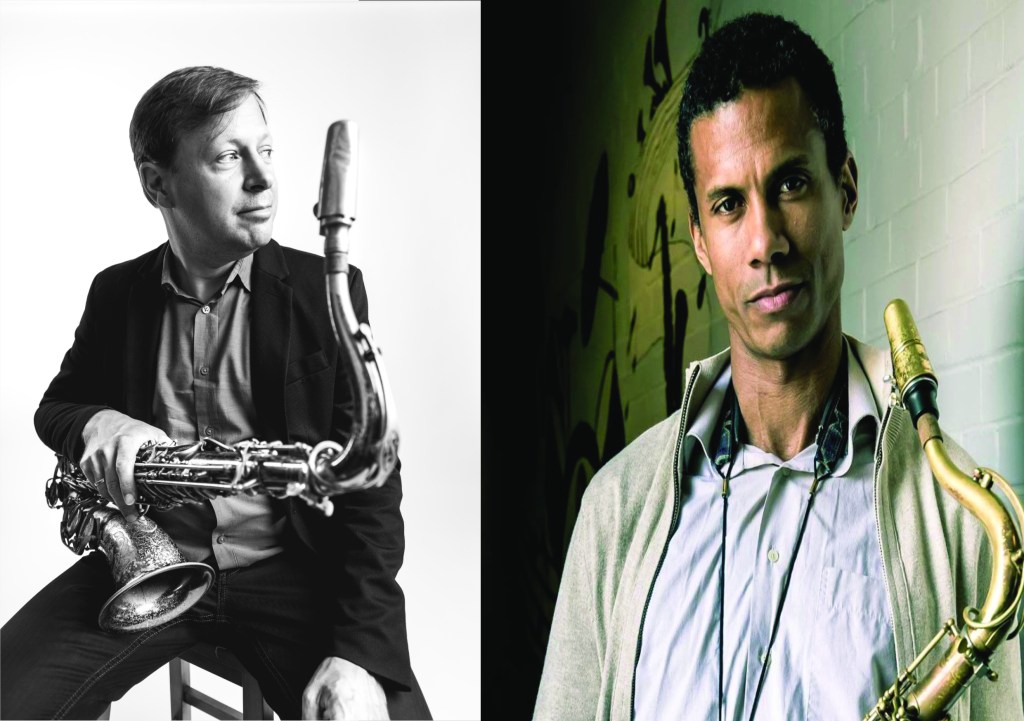
    Chris Potter and Mark Turner: Two Titans of the Tenor Saxophone

    When discussing modern jazz saxophone, the names Chris Potter and Mark Turner loom large, their styles as distinct as their paths to prominence. Both emerged in the 1990s and quickly established themselves as paragons of technical mastery and creative ingenuity. Yet, their approaches to improvisation, their artistic priorities, and the influences they’ve passed on to subsequent generations could hardly be more different. Together, they’ve reshaped the landscape of jazz saxophone, setting a dual template for innovation that continues to inspire younger players.

    Chris Potter: Virtuosity and the Power of the Line

    Chris Potter is often described as a prodigy-turned-maestro. By the time he joined Red Rodney’s band at 18, his immense technical facility was already drawing attention. Potter’s playing is marked by a seemingly endless flow of ideas, a relentless pursuit of motion and development. His lines are complex but grounded in the jazz tradition; one can hear echoes of Sonny Rollins’ muscular phrasing, Coltrane’s sheets of sound, and Michael Brecker’s virtuosic articulation.

    Potter’s improvisational style prioritizes momentum. His solos are like journeys through dense harmonic landscapes, building tension with intricate chromaticism and cascading arpeggios. He uses odd meters and shifting rhythms with ease, as heard on albums like Gratitude and The Sirens. His technical mastery allows him to execute ideas with astonishing clarity, often leaving listeners marveling at the sheer physicality of his playing.

    This combination of tradition and forward-thinking virtuosity has had a profound influence on younger saxophonists. Musicians like Donny McCaslin, Melissa Aldana, and Ben van Gelder have clearly absorbed Potter’s ability to fuse technical brilliance with emotional intensity. His command of extended techniques—overtones, multiphonics, and altissimo—is now almost expected of the modern saxophonist, thanks in large part to his example.

    Mark Turner: Intellectualism and the Geometry of Sound

    Mark Turner occupies a contrasting space. While Potter’s playing might evoke a roaring river, Turner’s style is more akin to a Zen garden—spare, meditative, yet deeply intricate. Turner’s sound is rooted in the airy, pianistic approach of Warne Marsh and Lee Konitz, but he pushes this lineage into new conceptual territory.

    Turner’s improvisations are architectural. His use of wide intervals, counterpoint, and harmonic abstraction creates a sense of verticality; the listener feels as though they’re navigating a vast, open structure rather than a linear narrative. On albums like Ballad Session or Lathe of Heaven, his tone—soft, almost dry—offers a sharp contrast to Potter’s robust sound. Turner is less interested in the overtly virtuosic than in developing thematic material with precision and patience. His improvisations often feel like intellectual puzzles, where the resolution emerges gradually and with great subtlety.

    Turner’s influence is perhaps more niche but no less profound. Players like Ben Wendel, Walter Smith III, and Logan Richardson have adopted elements of his intervallic approach, his interest in non-standard chord progressions, and his commitment to restraint. His refusal to rely on flashiness has encouraged a generation to explore depth over spectacle, making him a beacon for those who value conceptual rigor.

    Two Paths, One Legacy

    Comparing Potter and Turner highlights a fascinating dichotomy in modern jazz. Potter’s approach is rooted in kinetic energy, in the momentum of the line and the thrill of harmonic complexity. Turner, by contrast, seeks clarity and space, prioritizing thematic development and harmonic exploration. Both players are firmly connected to the jazz lineage—Potter through Coltrane and Brecker, Turner through Marsh and Konitz—but they’ve extended it in ways that have fundamentally altered how the tenor saxophone is played and conceived.

    The dual influence of Potter and Turner on subsequent generations is undeniable. For young saxophonists today, these two figures represent complementary ideals: the technical brilliance and drive of Potter, the intellectual depth and abstraction of Turner. It’s no surprise that many contemporary players aim to synthesize elements of both. Ben Wendel, for example, draws on Potter’s rhythmic energy and Turner’s contrapuntal sensibility, while Walter Smith III balances thematic development with virtuosic flourishes.

    Their Own Influences

    It’s worth noting how Potter and Turner themselves arrived at their approaches. Potter’s influences—Coltrane, Rollins, Brecker—are evident, but his interest in other genres, from funk to folk, has broadened his palette. Albums like Underground showcase his willingness to incorporate electric instruments and groove-based textures, echoing Brecker’s experiments with fusion but with a more contemporary twist.

    Turner, on the other hand, has often cited Marsh and Konitz as foundational influences, but his fascination with classical music—particularly the contrapuntal works of Bach—sets him apart. His compositions often resemble chamber pieces, blurring the line between jazz and contemporary classical music.

    Two Poles of Modern Saxophone

    Chris Potter and Mark Turner have charted two poles of the modern saxophone, each offering a model of what jazz can be in the 21st century. Potter’s athleticism and harmonic daring are a reminder of the power of sheer momentum and technical command, while Turner’s introspection and precision point toward the value of patience and abstraction. The influence of these two titans is everywhere in contemporary jazz, their contrasting approaches serving as a dual compass for the current and future generations of players. Whether through the explosive energy of Potter or the quiet profundity of Turner, the tenor saxophone continues to speak in new and compelling voices, thanks in no small part to these two remarkable musicians.

  • An Interview with Brad Mehldau

    An Interview with Brad Mehldau

    by Max Millar

    Max Millar: Brad, first off, let me just say what an absolute honor it is to sit down with you. Your playing has shaped how I approach the piano, and I know countless others feel the same way. Thanks for taking the time to talk.

    Brad Mehldau: Thanks, Max. I’m glad the music has resonated with you. That means a lot.


    Max Millar: Let’s dive in. One thing that always strikes me about your playing is your ability to layer textures—like how you weave independent melodies in your right and left hands. I think of pieces like your take on Radiohead’s Exit Music (For a Film) or your improvisations on Blackbird. How did that kind of contrapuntal approach develop?

    Brad Mehldau: It goes back to my early fascination with Bach. I’ve always been drawn to the way he could make two or three voices speak independently but still interact in a meaningful way. When I’m improvising, I’m often thinking of counterpoint—not in a strict, academic sense, but as a way to let the left hand have its own conversation while the right hand explores something else. It’s like two characters in a dialogue.

    But it’s also emotional. With Exit Music, for example, the goal was to capture that haunting melancholy, and counterpoint helps create that tension. One voice pulls you in one direction, the other in another—there’s this unresolved feeling that mirrors the song’s narrative.


    Max Millar: That’s fascinating. And when it comes to harmony, your reharmonizations are legendary. I’ve heard people describe your chords as “classical meets jazz meets pop.” What’s your process when reimagining a tune harmonically?

    Brad Mehldau: Reharmonization is where I let my instincts take over. When I hear a melody, I ask myself: What else could this melody be saying? A simple diatonic progression might work beautifully, but shifting to something chromatic or unexpected can reveal a different side of the tune.

    Take Blackbird, for instance. It’s a beautiful melody that sits perfectly over a standard folk progression, but if you add, say, a diminished chord or imply a Lydian sound, suddenly it’s a little more unsettled, even bittersweet. I think about tension and release—how the harmony can heighten or subvert what the melody is already doing.


    Max Millar: That idea of tension and release comes up in your use of rhythm too. The way you’ll play with time, stretching or compressing phrases, can be so breathtaking. How do you approach that sense of rubato and rhythmic flexibility?

    Brad Mehldau: That’s something I’ve worked on for a long time. It’s about listening and trust. When you’re playing in a trio, for example, you have to trust that the bass and drums will hold the pulse, even if you’re floating above it. And vice versa—they need to trust you to eventually resolve back into the groove.

    But rubato isn’t just about freedom. It’s about intention. If I’m stretching a phrase, I want it to feel natural, as if the melody needs to take that breath. You don’t want it to feel like a gimmick. Keith Jarrett does this masterfully—he’s always breathing with the music, even when he’s pushing it to its limits.


    Max Millar: Speaking of Jarrett, your solo playing often gets compared to his—particularly in how you build improvisations so organically. How much of his influence do you carry with you, and how do you carve out your own space in that lineage?

    Brad Mehldau: Jarrett is, without a doubt, a massive influence. His solo concerts are like these vast emotional landscapes where every idea feels inevitable, like it couldn’t have gone any other way. That’s something I aspire to—letting the music unfold naturally, without forcing it.

    But I also think about what I can bring to the table. For me, it’s about weaving in the other influences I’ve absorbed, whether it’s Radiohead, Nick Drake, Brahms, or Coltrane. Those elements are part of my personal story, and they help shape the narrative I’m telling in the moment.


    Max Millar: Your incorporation of pop and rock influences has been so important for bridging jazz with a wider audience. What draws you to artists like Radiohead or Nick Drake, and how do you translate their music into your language?

    Brad Mehldau: I’m drawn to music that feels honest, whether it’s jazz, classical, or rock. Radiohead and Nick Drake, in particular, have this emotional vulnerability that resonates with me. It’s not about genre—it’s about finding the humanity in the music.

    When I arrange a pop tune, I’m not trying to make it “jazzy.” I’m trying to preserve what makes it special while letting it breathe in a different way. With Radiohead’s Everything in Its Right Place, for instance, I kept that hypnotic, looping quality but added improvisational elements to create a dialogue with the original.


    Max Millar: Let’s talk about younger pianists. Your influence on players like Gerald Clayton, Tigran Hamasyan, and Aaron Parks is undeniable. What do you hope the next generation takes from your work?

    Brad Mehldau: I hope they take the idea that jazz is a living, evolving art form. It’s about tradition, yes, but also about curiosity and exploration. I’ve always tried to approach music with an open mind, whether it’s diving into the American songbook or exploring contemporary music.

    And I hope they see that it’s okay to let your personality shine through. Jazz isn’t about fitting into a box; it’s about expressing who you are in the most honest way possible.


    Max Millar: One last question, Brad. After everything you’ve accomplished, what still excites you about making music?

    Brad Mehldau: The unknown. Every time I sit at the piano, there’s the potential to discover something new. Music is infinite, and no matter how much you learn, there’s always more to explore. That sense of possibility—that’s what keeps me coming back.

    Max Millar: Beautifully said. Thank you, Brad, for sharing your insights. This has been a dream come true for me.

    Brad Mehldau: My pleasure, Max. Keep playing, and keep listening. That’s what it’s all about.