Tag: classical-music

  • Brahms and The Resonance of Duality in Modern Jazz

    Brahms and The Resonance of Duality in Modern Jazz

    Brahms, like the other great composers of the Romantic era, invites us to experience a profound and deeply human emotional complexity that resonates far beyond his time. His music, particularly the achingly beautiful passages like the Adagio of his Clarinet Quintet, embodies dualities—major and minor, desire and resignation, presence and absence—that offer a fertile ground for reinterpretation. For jazz musicians, who live and breathe through improvisation, Brahms’ work becomes not only a source of inspiration but a framework for their own explorations of tension, release, and emotional narrative.

    In jazz, Brahms’ harmonic language finds a modern echo. The subtle interplay between E minor and B major in the Quintet’s Adagio—where the minor IV shifts to the major I—creates a bittersweet sensation, a “happysad” compound that is just as potent in a Bill Evans voicing as it is in a Brahms melody. This blend of tonalities speaks to the jazz musician’s instinct for mixing colors, for leaning into harmonic and emotional ambiguity. It’s a hallmark of Romantic irony, acknowledging dual truths simultaneously—joy and sorrow, yearning and contentment—which is equally a hallmark of great jazz improvisation.

    Brahms’ “melting dualities” align with the spirit of jazz because both traditions thrive on contradiction. Jazz improvisation, like Brahmsian harmony, often toggles between worlds—mixing blues scales with major cadences, or blending modal freedom with strict time. This is the musician’s way of “riffing” on reality, of embodying the bittersweet truths that music articulates so much better than words. It’s no wonder that Brahms’ harmonic language, rich in contrast and yet deeply integrated, slips so seamlessly into the vocabulary of a jazz player.

    The Romantic period’s emphasis on subjectivity and introspection also finds a home in modern jazz. Brahms’ work often suggests an unattainable beauty—a “wordless narrative” spinning from deep within his compositions. This yearning for what lies just out of reach parallels the improviser’s task: to transform personal impressions into a shared sonic experience. In jazz, the artist may “riff on Brahms,” but what emerges is not an imitation; it’s an individualized reflection of their emotional and artistic connection to the music. The harmonic warmth and contrapuntal complexity of Brahms’ works provide rich soil for jazz players to cultivate their own interpretations.

    Further, Brahms’ sense of displacement—his ability to evoke the “so near yet so far” ache—mirrors the jazz musician’s approach to time and rhythm. In jazz, the swing feel itself embodies a kind of temporal duality, a micro-pulling and pushing against strict time. The player and listener alike hover between the beats, seduced by a rhythmic presence that, like Brahms’ melodies, shimmers with immediacy but remains elusive.

    In both Romanticism and jazz, the act of listening becomes an act of co-creation. Brahms’ late works, steeped in introspection, leave space for the listener’s interpretations and emotions, much like the space-filled voicings of a jazz pianist or the open phrasing of a soloist. As the essay so beautifully suggests, Brahms’ music operates not just as an expression of emotion but as a subject that “befriends” the listener, offering a consolation as human as it is sublime. Jazz improvisers mirror this empathetic exchange, inviting listeners to inhabit their own interpretations within the shared moment of performance.

    Ultimately, the Romantic ethos of duality—the interplay of opposites—unites Brahms with modern jazz. It’s the tension between major and minor, joy and sorrow, immediacy and distance, that gives both Brahms’ music and jazz their timeless humanity. In a jazz improvisation, Brahms’ harmonic motifs might appear transformed but recognizable, like a familiar face seen in a dream. This creative transmutation is not about loyalty to the original; it’s about continuing a conversation across time. Just as Brahms once looked to Schubert or Bach for inspiration, today’s jazz musicians find in Brahms’ music a wellspring of ideas to be reshaped, reimagined, and improvised upon.irit—a resonance that bridges the gap between centuries, styles, and sensibilities.

  • Clavichord – András Schiff

    Clavichord – András Schiff

    Review of Clavichord – András Schiff
    By Max Millar

    András Schiff’s Clavichord album is a masterful and deeply personal exploration of an instrument often relegated to the shadows of the piano family, yet one that carries an intimacy and sensitivity that few others can match. In a career that has already encompassed some of the most treasured performances of Bach, Beethoven, and Schubert on the modern piano, Schiff’s venture into the realm of the clavichord is a profound expression of his artistic curiosity and understanding of historical keyboard instruments. This recording is not merely an exercise in nostalgia for a bygone sound but rather a careful investigation into the emotional and tonal potential of the clavichord, which in Schiff’s hands feels startlingly fresh and intimate.

    The clavichord, with its soft, percussive tone, is an instrument that demands an extraordinary degree of control and precision from its performer. Schiff’s technical mastery is beyond dispute, but what stands out most here is his ability to coax a wide range of nuances from the instrument—something that could easily be lost in less capable hands. In works such as Bach’s Well-Tempered Clavier, Schiff not only offers a historically informed performance but also brings a warmth and directness to the music that resonates on a more personal level. His approach is subtle, eschewing the more overt dramatic flourishes that modern pianos often encourage, instead opting for a quieter, more introspective interpretation that highlights the delicate, almost tactile nature of the clavichord.

    From the opening bars of the Well-Tempered Clavier, Schiff’s touch is a revelation. Where many pianists would seek to project the grandeur and complexity of Bach’s counterpoint, Schiff distills these elements down to their essential, almost conversational qualities. The clavichord, with its intimate sound—so much softer than the piano, yet capable of exquisite detail—is perfectly suited to his nuanced phrasing. The connection between performer and instrument here feels almost tactile: every slight variation in pressure and touch has a profound effect on the tone, allowing Schiff to extract a level of emotional depth that feels both private and profound.

    Schiff also takes a deeply personal approach to the instrument itself. The clavichord has long been admired for its ability to convey subtle dynamic shifts, but few have explored its capacity for emotional expression with as much care as Schiff does here. His interpretations never feel dry or academic but rather imbued with a sense of quiet reflection, as though he is uncovering something new in these well-known works with every note.

    In a sense, Clavichord is a conversation between two worlds—one ancient, one contemporary—where Schiff brings the past into dialogue with his own deep understanding of music’s emotional potential. The limited dynamic range of the clavichord is not a hindrance to Schiff, but an opportunity to delve deeper into the music’s emotional undercurrent. The softer attacks and gentle dynamics create a sense of intimacy, drawing the listener into a space that feels both historical and timeless.

    The program itself, while relatively brief, is impeccably chosen. Alongside Bach’s Well-Tempered Clavier, Schiff includes works by Scarlatti, Beethoven, and Mozart—composers who, though far removed from the clavichord’s heyday, still wrote music that can speak to its unique qualities. The Sonatas by Scarlatti, especially, are played with a delicate yet lively sense of phrasing that sounds completely at home on the clavichord. In the Beethoven, Schiff’s interpretation feels personal, touching on the composer’s more introspective moments, while the Mozart is rendered with the clarity and elegance one expects from this great interpreter of the classical repertoire.

    Overall, this album is as much about András Schiff’s artistic vision as it is about the clavichord itself. It is a love letter to the instrument, yes, but also a statement on the continued relevance of historical performance practices in the modern world. The album is a rare gem—one that will appeal not just to connoisseurs of period instruments but also to anyone interested in experiencing the deeper emotional currents of some of the greatest keyboard works in history.

    Schiff’s Clavichord is a deeply contemplative and personal work. It rewards patience, inviting listeners into a space where small gestures hold great significance. This is no virtuosic display of technical prowess, but rather an invitation to explore the music’s subtleties in a setting that brings the performer and listener into an almost confessional proximity. In a world where grand gestures often dominate, Schiff’s approach is a welcome reminder of the power of quiet, restrained beauty.

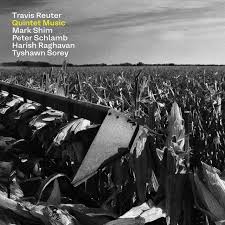
  • Quintet Music by Travis Reuter

    Quintet Music by Travis Reuter

    Review of Quintet Music by Travis Reuter
    By Max Millar

    Guitarist Travis Reuter’s Quintet Music offers a striking blend of intellectual rigor and emotive depth that speaks directly to the heart of contemporary jazz. With this debut album, Reuter steps into a realm where composition and improvisation coexist as one fluid, multifaceted entity. Drawing on a lineage of forward-thinking jazz guitarists—primarily the harmonic ingenuity of Pat Metheny and the angularity of modernists like Bill Frisell and Kurt Rosenwinkel—Reuter has carved out a sound that is undeniably his own, marked by its bold rhythmic exploration and dynamic arrangements.

    From the opening track, “Elephant in the Room,” Reuter’s quintet establishes an immediately identifiable sound. His guitar tone is crisp, with a clean, direct presence, a clear voice amidst a sea of textures laid down by saxophonist Jon Irabagon, trumpeter Jonathan Finlayson, bassist Michael Formanek, and drummer Tyshawn Sorey. The group’s interplay is a masterclass in cohesion—rhythmic tension and release, harmonic unpredictability, and, above all, a palpable sense of urgency in every note.

    The compositional depth of Quintet Music cannot be overstated. Reuter’s pieces—such as the sprawling, multi-sectioned “Scale of the Universe” and the quirky, dissonant “Insomnia Waltz”—both challenge and reward the listener. These are not just songs but explorations, journeys that unfold with dramatic pauses, sudden shifts, and long, winding builds. The harmonic landscape is vast but never overwhelming, thanks to Reuter’s meticulous structuring and the singular chemistry of his band. His charts, though intricate, leave plenty of room for the kind of spontaneous, real-time improvisation that marks the best of modern jazz.

    The inclusion of Irabagon and Finlayson adds a dynamic layer of sonic complexity. Irabagon’s tenor saxophone, with its clear, piercing timbre, contrasts nicely with Reuter’s more restrained yet urgent guitar playing. Both musicians frequently engage in two-way dialogues, their voices interweaving like threads in an ever-evolving tapestry. Finlayson’s trumpet work, with its sharp articulation and commanding phrasing, serves as a perfect foil, particularly in the more driving sections of tracks like “Trio of Stars.” Sorey, an artist of immense capacity, proves himself to be the heartbeat of this ensemble, propelling the music forward with his ever-changing, elastic rhythms, while Formanek’s bass adds an additional layer of grounding complexity.

    What stands out about Quintet Music is not just its structural ambition, but the emotional range it traverses. Reuter’s ability to balance intellect with heart is perhaps his most striking feature. This is not “heady” music in the sense that it distances itself from emotional resonance; on the contrary, it invites you to feel just as much as think. In tracks like “One Step Ahead,” the quintet delivers a perfect balance between complexity and groove, creating space for each voice to be heard while maintaining a cohesive narrative.

    Sorey’s work as a drummer cannot go unmentioned. On “The Quiet Revolution,” his ability to subtly shift rhythms and use space as an active force in the composition creates an atmosphere of suspended tension, allowing the other musicians the room to breathe. Formanek’s bass, often acting as the music’s connective tissue, roots the ensemble in a pulse that feels ever-present but never overbearing. The collective mastery of these musicians is impressive, but it’s Reuter’s careful, considered leadership that holds it all together.

    In sum, Quintet Music is a remarkable debut that will undoubtedly serve as a touchstone for Travis Reuter’s career. He’s a guitarist of great technical prowess and even greater imagination, forging a path forward for the guitar in contemporary jazz. This record suggests that Reuter is an artist who understands the importance of both tradition and innovation—merging the intellect of the modern jazz lexicon with the heart of a storyteller. It is cerebral but warm, challenging yet deeply rewarding. For anyone invested in where jazz is headed, this is a statement that shouldn’t be missed.

  • Max Richter – Glasgow Concert Hall 24/10/2024

    Max Richter – Glasgow Concert Hall 24/10/2024

    Max Richter’s concert at the Glasgow Royal Concert Hall on October 24, 2024, was an ethereal and emotionally resonant experience that showcased the best of his contemporary classical mastery. Performing in front of a full house, Richter brought his signature blend of minimalist symphonies and ambient electronic textures to life with a captivating intensity.

    The program spanned a selection of Richter’s most beloved works, including pieces from Sleep and The Blue Notebooks, with the audience enveloped by his hauntingly beautiful orchestrations. As ever, Richter’s music wove a delicate balance between deep introspection and profound cinematic vastness, delivering an evocative journey. His rich, layered compositions, often sweeping across atmospheric soundscapes, seemed to transport the audience into a dreamlike state.

    A standout moment was the live performance of “On the Nature of Daylight,” which resonated deeply with listeners, combining strings and electronic elements to create a soaring, melancholic atmosphere that had the audience visibly moved. The performance was underscored by Richter’s insightful commentary, which added a personal layer to his work, enriching the experience and creating a unique connection between the composer and the audience.

    Richter’s collaboration with his ensemble—featuring exceptional string players and an array of electronic accompaniments—was as tight as ever, creating a seamless integration of traditional classical instrumentation and modern, ambient sounds. This combination allowed for moments of quiet introspection, followed by explosive, layered crescendos that left the room pulsing with emotion.

    Despite the somewhat understated presentation—Richter is not one for grandiosity—the performance had an immense emotional weight, capturing the essence of his work: deeply personal, yet universally resonant. As the concert closed with the majestic strains of Vivaldi’s Recomposed, the audience responded with rapturous applause, a reflection of how thoroughly Richter’s music had transported them.

    Overall, Max Richter’s October performance in Glasgow exemplified why he remains one of the most prominent figures in contemporary classical music. It was a night of both subtle beauty and overwhelming emotional power, reaffirming his ability to communicate profound narratives through sound. For those who seek a deeply moving and intellectually stimulating musical experience, Richter’s concerts continue to be an unmissable event.