Tag: improvisation

  • Robson Finds his Home with Momentous Debut

    Robson Finds his Home with Momentous Debut


    Joe Robson – Home (feat. Seamus Blake)

    Wilson’s Castle Productions

    ★★★★★

    Normally when bandleaders announce themselves with a debut album of such mastery, we already know their name, have seen them at Ronnie Scott’s, have heard them as a sideman or some Edition or Whirlwind records, and have been eagerly awaiting their “Introducing…” release. That was not the case with this relatively unknown Scottish guitarist who appears to have been doing his work in the dark before bursting into the light with an album of the year contender.

    Joe Robson’s debut album Home is a work of lyrical intimacy and understated virtuosity that feels nostalgic and familiar, yet startlingly fresh without ever being predictable. With this project, the guitarist-composer offers an evocative meditation on belonging, memory, and the places we carry within us, drawing on a deep well of both Jazz and Celtic traditions while imprinting them with his uniquely personal voice.

    Seamus Blake, ever the alchemist, brings his inimitable sound to “Seven Sisters,” and the opening – and most powerful – track, “Emergence.” Instantly recognisable from his first note, his solos resonate with the kind of emotional authenticity that defines this record, delivering rapid-fire runs, intricate harmonic ideas, and seamless shifts between registers with an ease that borders on the supernatural.  However, Seamus’s contribution seems to me more the icing on the cake than a core ingredient. Whilst I understand why, “feat. Seamus Blake,” was used so prominently in the title and artwork, I feel it maybe distracts from quite how special this core band is, with a sound that sits somewhere in the realms of melodic modern jazz, contemporary Scottish folk, Nordic post-rock and neoclassical. 

    Throughout, Robson’s compositions are striking in their clarity and emotional resonance, with intricate arrangement evolving into free improvisation, never losing the emotive thread which runs through the record like a narrative. There’s no wasted movement or overplaying and many of the solos are concise, often with different soloists trading ideas, inspiring one another. There are a few expansive improvisations like Carmichael’s commanding solos on Searching for Home and Brotherhood, and Robson’s breathtaking guitar solo on Becoming, which has hints of Metheny and Mehldau. These rare moments show Robson’s command of rhythm and harmony, and his depth of jazz vocabulary, in a record where the improvisations serve the music as a whole, rather than merely providing a stage for the soloist to shine.

    In this sense, it is hardly a surprise that there is such unity and chemistry with saxophonist Matt Carmichael’s, whose philosophy of serving the music with his distinctive and creative voice has already established him as a star of British Jazz, with an impressive discography, including the phenomenal Marram (Edition Records). His improvisations are perfectly constructed real-time compositions steeped in the warm inflections of Celtic folk, transforming it into a meditative incantation that soars over the band’s sparkling accompaniment. Altoist, Adam Jackson, is also a creative force with a more cutting, fiery sound, reminding me at times of Tim Berne or Chris Speed. His playing is as emotive as it is inventive, and he pushes boundaries with the content of his phrases and the tone and shape of his sound, creating an almost visceral effect in the listener.  

    There are unexpected turns, when Venchen or Emergence build to a set of original reels, or when Searching for Home descends into a dark, dissonant vortex before emerging with a delicate beauty and sense of hope. Overall, there is a narrative continuity and a distinctive sound which is produced, at least in part, by the timbral blend of the twin saxes weaving in and out of the warm electric guitar and the organic, earthy sound of Charlie Stewart’s fiddle.

    With Home, Joe Robson establishes himself as a rising star in contemporary jazz, one with a voice as poetic as it is quietly powerful. A work that honours its roots while carving out new territory, it is as much a landmark for Scottish jazz as it is a deeply personal statement, one that lingers in the mind and heart long after the final note has sounded. This is music for finding your own sense of home – wherever that might be.
    https://joerobson.bandcamp.com/album/home

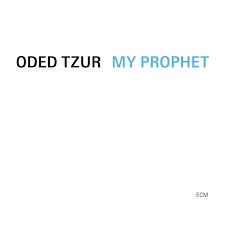
  • Oded Tzur: Microtonal Mastery and Spirituality on My Prophet

    Oded Tzur: Microtonal Mastery and Spirituality on My Prophet

    ECM Records
    ★★★★☆

    By Max Millar

    When Oded Tzur first emerged on the international jazz scene, it was clear that this Israeli saxophonist was playing by his own rules. Tzur’s work had always been distinguished by his deeply spiritual approach to music, drawing from the ancient traditions of Indian classical music and seamlessly blending them with jazz’s improvisatory language. With each release, his sound evolved into something even more distinct, with his innovative technique—a microtonal approach to the saxophone—allowing him to stretch the instrument’s expressive capabilities in ways that few musicians have attempted before. His latest album, My Prophet, marks another striking chapter in this journey, demonstrating not just a refined musical technique but a profound deepening of his voice as an artist.

    Tzur’s distinctive sound is rooted in a technique he calls Middle Path, which extends the saxophone’s microtonal capacity. Inspired by the playing of Indian maestro Hariprasad Chaurasia, whose bansuri (bamboo flute) mastery includes the ability to move between microtones with fluidity, Tzur began to reimagine the saxophone’s potential. While the Western music tradition has historically dealt in fixed pitches and semitone intervals, Tzur’s technique allows for far more subtle variations—sliding between pitches, bending notes in a way that evokes the tonal flexibility of Indian instruments like the bansuri, sitar, and veena. These microtonal shifts breathe new life into the saxophone, turning it into a vessel capable of moving between emotional states with a new depth of resonance.

    On My Prophet, Tzur’s use of Middle Path reaches new heights. The album presents an entirely new level of sonic intimacy, as the saxophone weaves intricate melodic lines, with Tzur bending and shaping every note, creating a dynamic range of tones that shifts with remarkable fluidity. In his previous ECM releases, like Like a Great River (2016), this approach was already evident, but My Prophet showcases it with greater clarity and precision. The album is less a collection of individual compositions and more a thematic journey, one in which Tzur meditates on both the physical and spiritual worlds—perhaps most notably, a reflection of his experiences living in New York, a city teeming with contrasts, contradictions, and possibilities.

    The title My Prophet evokes a sense of personal revelation, and the music that unfolds throughout the album resonates with an almost sacred aura. Tzur’s mastery of microtones is complemented by the rich textures of his ensemble—veteran bassist Matt Penman, drummer Nasheet Waits, and pianist Nitai Hershkovits (who also worked with Tzur on his earlier projects) form a cohesive, almost meditative unit. The rhythm section’s interplay with Tzur’s saxophone is subtle yet deeply engaging, creating a musical space where silence and sound coexist with equal power. Tzur’s sound is less about complexity and more about nuance—each note feels deliberate, yet open to the infinite possibilities of jazz improvisation.

    The album opens with the title track, “My Prophet,” which encapsulates Tzur’s technique at its most evocative. The piece begins with a long, sustained note on the saxophone that seems to bend and twist in space. The rhythmic pulse slowly enters, with Waits’ delicate brushwork setting the pace for the saxophone’s melodic line. The influence of Indian classical music is palpable here, as Tzur allows the note to slide in and out of focus, creating a mood of mystical searching. His saxophone no longer feels like a Western instrument but a voice steeped in a spiritual tradition, rich with the colors of ancient Indian ragas.

    Tracks like “The River,” with its shimmering, elongated phrases, feel like meditations on time itself—slowing down and stretching, yet never becoming stagnant. Meanwhile, “Nirvana,” a standout track, shows Tzur’s intricate relationship with improvisation. The saxophone alternates between delicate melodic lines and intense bursts of sound, underscoring Tzur’s ability to bring together the disparate worlds of jazz and Indian music without losing either’s essence. His technique of sliding between microtones creates an emotional depth that’s as resonant as any harmonic structure.

    When comparing My Prophet to Tzur’s previous ECM releases, particularly Like a Great River and Dharma (2019), one notices a continued evolution of his sound. Dharma was already a clear statement of his fusion of jazz and Indian tonalities, but My Prophet feels more intimate, more reflective. Tzur’s saxophone has become even more expressive, as though he’s now speaking from a deeper place of understanding, one that transcends genre. His ability to integrate microtonal inflections into jazz improvisation has reached its most mature stage here, suggesting that Tzur’s musical voice has solidified into something that feels both timeless and of the moment.

    While his earlier ECM work often embraced the vastness of sound, My Prophet feels more inward, a search for clarity through simplicity. The compositions, though intricate, don’t draw attention to themselves; rather, they allow the interplay between melody, rhythm, and space to become the focus. Tzur’s saxophone technique is more than just a vehicle for sound—it’s a means of spiritual expression. The result is an album that feels deeply meditative, an exploration of both the outer world of jazz and the inner realm of the soul.

    In essence, My Prophet is a culmination of Tzur’s singular vision. It brings together his profound understanding of Indian music with his jazz sensibility to create something wholly unique. The saxophone, under his fingers, becomes a tool for transcendence—a bridge between two worlds of music that, when combined, offer a sound more compelling than either could produce alone. Tzur has truly found a Middle Path, and on My Prophet, he invites us to walk it with him.