Tag: rock

  • The Trouble with Beauty: Ambrose Akinmusire’s honey from a winter stone

    by Max Millar

    There’s a point, somewhere around the twelfth minute of s-/Kinfolks—a thirty-minute suite that feels, at times, like a cross between a Miles Davis outtake and a séance—where Ambrose Akinmusire’s trumpet seems to hesitate. It’s not a mistake, not even a rest in the usual sense, but a deliberate inhalation. The listener inhales with him. Then, almost imperceptibly, the strings resume, and a voice—Kokayi’s, cracked with exhaustion—cuts through the air like a moral interruption. “You give me rocks so I can sink when I swim.” It’s one of those moments that jazz still allows: something raw, uncomfortable, and unsummarizable happens, and you realize that beauty alone isn’t what the artist is after.

    Akinmusire has always struck me as an artist uneasy with beauty, or at least with its easy consumption. His earlier Owl Song was a delicate and deeply contemplative record—so beautiful, in fact, that critics ran out of adjectives and began to quote each other. honey from a winter stone, his second release for Nonesuch, seems determined to escape that corner. It’s the kind of record that, if you leave it on while doing the dishes, you’ll find yourself stopping mid-plate, a little annoyed that it demands your full attention.

    He has built it around a principle borrowed from the late Julius Eastman, the brilliant, self-destructive composer whose music was as much about social defiance as it was about sonic innovation. Eastman called his method “organic music”—the gradual layering and transformation of material until form itself became an act of resistance. Akinmusire, in taking Eastman’s cue, seems to be asking what it means for a Black jazz musician to make “organic music” in 2025, when even outrage risks being commodified.

    The opening track, Muffled Screams, unfolds in a series of “episodes,” like a dream that keeps rewriting itself. Akinmusire’s trumpet begins almost alone, rising out of Sam Harris’s rippling piano and Justin Brown’s anxious drumming, before handing off to the Mivos String Quartet and, eventually, to Kokayi’s voice—a voice that doesn’t so much rap as think aloud in rhythm. The seams between sections are seamless; what’s remarkable is not the range of styles (hip-hop, chamber music, ambient minimalism) but how calmly they coexist. This, perhaps, is Akinmusire’s answer to the chaos of contemporary culture: not fusion, but empathy.

    He calls the album a self-portrait, and you believe him. Across its five tracks, he stages a kind of internal conversation—between disciplines, between identities, between the seductions of form and the urgencies of lived experience. Owled sounds, at first, like the soundtrack to a postmodern nature documentary, all shifting textures and slow pulses, but by its final minutes it’s become a miniature requiem, the strings sighing behind the trumpet as if for the idea of coherence itself.

    And yet, for all its cerebral scaffolding, the record is deeply, sometimes disarmingly, emotional. Akinmusire’s tone—alternately fragile and ferocious—feels like a confession more than a performance. The long final track, s-/Kinfolks, drifts through grief and defiance, ending not with resolution but with exhaustion. The silence afterward feels earned, as if both musician and listener have survived something.

    Listening to honey from a winter stone is like reading a difficult novel: the reward isn’t pleasure but recognition. You come away reminded that complexity itself can be a moral stance—that coherence, in a fractured world, is a kind of courage.

    Akinmusire may be the closest thing jazz has to a novelist: patient, self-interrogating, wary of virtuosity for its own sake. His music keeps circling the same themes—memory, identity, the impossibility of speaking for a community without also implicating oneself—but it never resolves them. It can’t.

    And maybe that’s the point. In a culture that prizes immediacy and affirmation, honey from a winter stone insists on difficulty, on listening as a form of work. It’s an album that withholds as much as it gives, that reminds us, as Eastman did, that the truest kind of beauty comes from resistance.

    It’s not music for everyone. It’s music for the part of you that still believes art should change you, even—especially—when it hurts.

  • From Tin Pan Alley to TikTok: The Evolution of Pop into Jazz Standards


    Introduction: The Elastic Boundaries of the Jazz Canon

    Jazz, more than any other art form, thrives on reinterpretation. The very act of making a “standard” in jazz has never depended solely on composition, but rather on recomposition: the process by which musicians reimagine existing songs through improvisation, reharmonization, and rhythmic transformation. Historically, the so-called “jazz standards” were not born within jazz at all—they emerged from the popular music of their day. What we now regard as canonical repertoire—“All the Things You Are,” “Body and Soul,” “My Funny Valentine”—were, in their own time, the pop hits of Broadway and Hollywood.

    As jazz continues to evolve alongside contemporary culture, the question arises: which of today’s pop songs might, in decades to come, undergo the same metamorphosis from radio hit to bandstand staple?


    I. The Great American Songbook: Popular Music Reimagined

    When we examine the early to mid-20th century, the relationship between jazz and popular song is symbiotic. The composers of the Great American Songbook—Jerome Kern, Cole Porter, George Gershwin, Richard Rodgers—provided the raw materials for improvisation. These songs, often written for musical theatre or film, possessed a harmonic and melodic sophistication that lent itself to jazz reinterpretation.

    Take Kern’s “All the Things You Are” (1939): a tune from a Broadway musical (Very Warm for May) that became a harmonic playground for jazz musicians from Charlie Parker to Keith Jarrett. Or consider “My Favorite Things” (Rodgers and Hammerstein, 1959), whose transformation by John Coltrane in 1960 redefined not only the song but the modal jazz landscape itself.

    In these cases, the “popular” origins of the tunes were essential. Jazz musicians sought common cultural reference points—melodies that audiences recognized, yet which could be deconstructed and reborn through improvisation.


    II. The Second Wave: Pop Standards of the Late 20th Century

    By the 1960s and 1970s, the mainstream of popular music had shifted from Broadway to the recording studio. Jazz artists began turning to The Beatles, Stevie Wonder, Joni Mitchell, and later, Sting and Björk, for inspiration. Herbie Hancock’s “The New Standard” (1996) formalized this practice, featuring jazz renditions of pop songs by Don Henley, Nirvana, and The Beatles.

    Songs such as “Yesterday” and “Norwegian Wood” became as frequently reinterpreted in jazz as “Autumn Leaves” or “Misty.” The harmonic language of pop was evolving, but so too was jazz’s appetite for hybridization.

    This era revealed a critical truth: the “standard” is not a fixed category but a dynamic process of cultural negotiation. What makes a song a standard is not when it was written, but how well it can bear the weight of improvisation.


    III. Pop Songs of Today: The Future Jazz Standards?

    If we fast-forward to the 2020s, we find ourselves in a new musical ecology—one shaped by streaming algorithms and viral trends. Yet, even in this fragmented landscape, certain pop compositions display the structural and emotional depth that could invite future jazz reinterpretation.

    A few plausible candidates include:

    • Billie Eilish – “Happier Than Ever” (2021): Its gradual crescendo and harmonic shift from intimacy to catharsis echo the narrative arcs of classic standards. A jazz trio could easily explore its contrasting sections with dynamic improvisation.
    • Adele – “Someone Like You” (2011): With its timeless melody and clear harmonic motion, this song could function as the “Body and Soul” of the streaming era.
    • Bruno Mars – “Leave the Door Open” (2021): Already a nod to 1970s soul-jazz aesthetics, it could fit seamlessly into a future Real Book volume.
    • Taylor Swift – “Anti-Hero” (2022): Its introspective lyricism and chordal subtleties lend themselves to re-harmonization; imagine a slow swing or bossa nova rendition.
    • Jacob Collier – “All I Need” (2020): Though harmonically dense already, its rich textures and modulations invite jazz musicians to extend and reinterpret its layered complexity.

    In each of these examples, the potential for jazzification lies not only in harmonic sophistication but in emotional universality—an essential trait shared by both the Great American Songbook and contemporary pop.


    IV. Conclusion: The Continuing Conversation

    The jazz standard is not a relic of the past but a living tradition—an ongoing conversation between popular culture and improvisational artistry. As the sources of “popular” music shift—from Tin Pan Alley to Top 40 to TikTok—the jazz community continues to reinterpret the sonic vocabulary of the moment.

    Just as swing-era musicians once transformed show tunes into art music, the next generation of jazz artists will no doubt find inspiration in today’s pop anthems. The standards of tomorrow may well come from Spotify playlists rather than sheet music publishers, but the underlying process—the creative alchemy of jazz reinterpretation—remains timeless.


    In the end, the question is not whether pop songs can become jazz standards, but rather which songs will endure long enough, and resonate deeply enough, to invite the endless reinvention that defines jazz itself.

  • Grit, Grime and Groove. The Irreplaceable 55 Bar’s Legacy in Modern Jazz

    Grit, Grime and Groove. The Irreplaceable 55 Bar’s Legacy in Modern Jazz

    The recent closure of the 55 Bar marks the end of an era for New York’s vibrant jazz community and its underground live music scene. Known for its intimate setting and the free-flowing creativity it fostered, the 55 Bar had become an iconic landmark in the West Village. Despite its unassuming appearance as a subterranean dive bar next to the historic Stonewall Inn, the venue provided an indispensable space for musicians and fans alike, hosting a treasure trove of memorable performances over nearly four decades.

    Opened in 1919 as a neighborhood watering hole, the 55 Bar underwent several transformations before its ultimate reinvention as a home for live music in the 1980s. It was bassist Jeff Andrews who first pioneered the jazz scene there in the mid-’80s, and it wasn’t long before a host of iconic musicians made it their regular hang. The venue became synonymous with cutting-edge performances, particularly in the realms of jazz and fusion.

    The intimate nature of the space, coupled with a distinct bohemian charm, made it a haven for aspiring artists to take risks, experiment, and connect with fans and fellow musicians. It wasn’t unusual to see guitarists like Mike Stern, Leni Stern, Wayne Krantz, and Adam Rogers, along with saxophonists like Donny McCaslin and Chris Potter, gracing the stage on a given night. It was the kind of venue where the music spoke louder than any flashy presentation, and the patrons often shared an unspoken understanding that this was a place to experience something truly special.

    The 55 Bar was particularly revered by guitarists, who found the venue to be a perfect setting for showcasing their virtuosity and unique voices. As one writer pointed out, “Long before I ever visited the 55, I read about it, no doubt in Guitar Player and Guitar World, in connection with Mike Stern.” The club’s dedication to hosting a wide range of jazz and blues guitarists made it a special spot on the map for both musicians and fans who revered the craft. The performances were often marked by raw, emotional interaction between players, as well as a palpable sense of camaraderie, creating a deep connection between those onstage and the audience. It was a breeding ground for new ideas and an incubator for young talent.

    One of the most famous legacies of the 55 Bar was its role in cultivating the careers of musicians who would go on to achieve international acclaim. Perhaps the most notable example is when David Bowie recruited the members of his Blackstar band from the 55 Bar, recognizing the unique talents of saxophonist Donny McCaslin and guitarist Ben Monder. Such stories were common, as the 55 Bar became a place where both established musicians and newcomers could meet, collaborate, and push the boundaries of jazz music.

    Sadly, the 55 Bar’s final closure came in the aftermath of the COVID-19 pandemic, which forced the venue to shut down for 14 months. Despite a valiant fundraising effort involving prominent musicians like Chris Potter and Mike Stern, the financial strain was too great for the club to survive. The pandemic’s devastating effects on live venues across the world were especially felt here, where the venue had once been a bustling hub for musicians and listeners alike.

    For many, the loss of the 55 Bar represents more than just the closing of a club; it is the end of an important era in the jazz world. The venue had a reputation for being a true “musicians’ hang,” where musicians could experiment freely, learn from each other, and develop their craft in a supportive environment. Many a jazz legend passed through the club’s doors, and the space itself had become a character in the ongoing evolution of the genre.

    While the 55 Bar’s physical space is now gone, its legacy lives on in the countless musicians who performed there and the loyal fans who cherished the experience. The venue’s closure serves as a reminder of how fragile the world of live music can be, especially in the face of unforeseen crises. It also prompts reflection on the importance of maintaining intimate venues where musicians can take risks and audiences can experience the pure joy of spontaneous music-making.

    In the wake of this loss, the question arises: where else in New York City will the next generation of jazz musicians find a space like the 55 Bar, where they can hone their craft and connect with a community of listeners who understand the value of live, intimate performances? The 55 Bar will be sorely missed, but its impact on the jazz community is undeniable, and its memory will continue to inspire future generations of musicians who seek to create in the same spirit of spontaneity and innovation. Rest in peace, 55 Bar. You’ll never be forgotten.

  • Rolling on Through the Shadows

    Rolling on Through the Shadows

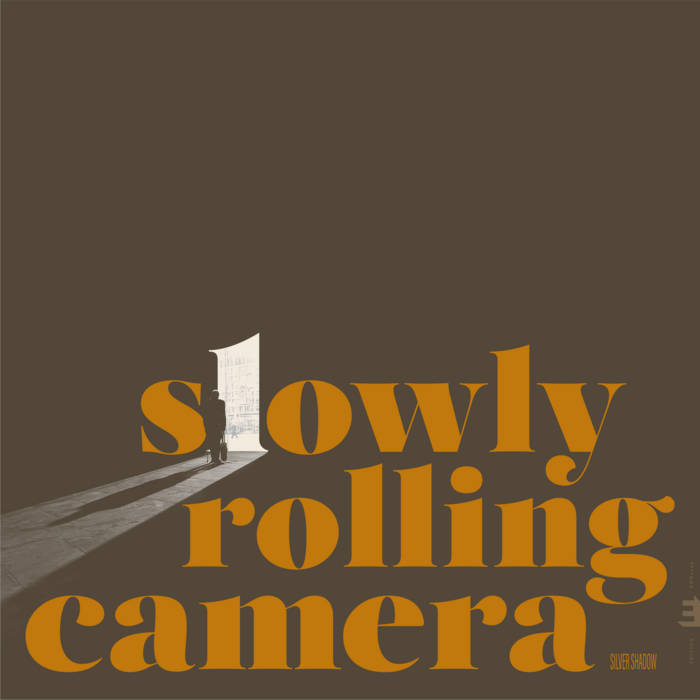
    Album Review: Silver Shadow by Slowly Rolling Camera
    By Max Millar

    Slowly Rolling Camera has always been an intriguing proposition—a group that blurs the lines between jazz, cinematic soundscapes, and electronica with a singular focus on mood and texture. With their fourth studio album, Silver Shadow, they’ve crafted a rich tapestry of sound that feels like the culmination of their decade-long sonic exploration. The result is a deeply immersive work, striking a balance between their cinematic tendencies and their love of jazz improvisation.

    From their self-titled debut in 2014, Slowly Rolling Camera established themselves as musical alchemists, blending the warm intimacy of soulful vocals with layered electronics and expansive orchestration. As their journey unfolded, albums like All Things and Juniper saw them shedding some of the vocal elements to lean into their instrumental voice, each project reflecting a new evolution of their sound. Silver Shadow feels like a further refinement, as they push their boundaries while embracing collaborations that bring fresh perspectives.

    The album opens with “Rebirth,” a pulsating piece that showcases the group’s knack for combining textural electronics with intricate jazz rhythms. It’s an immediate demonstration of the album’s collaborative strength, featuring saxophonist Josh Arcoleo, whose melodic lines thread seamlessly through the dense layers of sound. This interplay exemplifies the band’s ability to balance structure with freedom—a theme carried throughout the album.

    Saxophonists have played a pivotal role in Slowly Rolling Camera’s development; the presence of Chris Potter on the standout track “The Afternoon of Human night” (2021)is both grounding and transcendent. His unmistakable tone and virtuosic phrasing elevate the track’s atmospheric core, injecting it with moments of raw, unguarded emotion. Similarly, Mark Lockheart’s contributions on “In the Shadows” provide a haunting quality, his lyrical playing effortlessly navigating the tune’s shifting moods.

    What sets Silver Shadow apart from its predecessors is the way Slowly Rolling Camera integrates their collaborative spirit into the album’s DNA. Rather than featuring guest musicians as ornaments to their compositions, the group allows their collaborators to shape the music in profound ways. The dialogues between saxophone, piano, and electronics feel like conversations rather than monologues, creating an album that breathes and evolves organically.

    Sonically, Silver Shadow continues Slowly Rolling Camera’s tradition of high production values, with every note and texture meticulously placed. Dave Stapleton’s lush piano lines and delicate arrangements anchor the album, while Deri Roberts’ production imbues the music with a sense of vastness. The electronic elements remain a core feature, lending a modern edge to the timeless jazz influences.

    The title track, “Silver Shadow,” encapsulates the album’s essence. Built around a hypnotic groove, it gradually expands into a sweeping, cinematic piece, with layers of strings and brass folding into a powerful crescendo. The piece is emblematic of Slowly Rolling Camera’s ability to create music that is both intimate and grand in scale.

    Silver Shadow isn’t just an album; it’s a journey through sound. By bringing in collaborators like Potter, Lockheart, and Arcoleo, Slowly Rolling Camera has enriched their already distinctive sound palette, achieving a rare balance of innovation and cohesion. This is music for those who crave emotional depth and artistic boldness—a testament to a band that refuses to stand still.

    In an era where genres often define boundaries, Slowly Rolling Camera continues to chart their own course, and Silver Shadow is their most compelling voyage yet.