All Blog Posts

  • Oded Tzur: Microtonal Mastery and Spirituality on My Prophet

    Oded Tzur: Microtonal Mastery and Spirituality on My Prophet

    ECM Records
    ★★★★☆

    By Max Millar

    When Oded Tzur first emerged on the international jazz scene, it was clear that this Israeli saxophonist was playing by his own rules. Tzur’s work had always been distinguished by his deeply spiritual approach to music, drawing from the ancient traditions of Indian classical music and seamlessly blending them with jazz’s improvisatory language. With each release, his sound evolved into something even more distinct, with his innovative technique—a microtonal approach to the saxophone—allowing him to stretch the instrument’s expressive capabilities in ways that few musicians have attempted before. His latest album, My Prophet, marks another striking chapter in this journey, demonstrating not just a refined musical technique but a profound deepening of his voice as an artist.

    Tzur’s distinctive sound is rooted in a technique he calls Middle Path, which extends the saxophone’s microtonal capacity. Inspired by the playing of Indian maestro Hariprasad Chaurasia, whose bansuri (bamboo flute) mastery includes the ability to move between microtones with fluidity, Tzur began to reimagine the saxophone’s potential. While the Western music tradition has historically dealt in fixed pitches and semitone intervals, Tzur’s technique allows for far more subtle variations—sliding between pitches, bending notes in a way that evokes the tonal flexibility of Indian instruments like the bansuri, sitar, and veena. These microtonal shifts breathe new life into the saxophone, turning it into a vessel capable of moving between emotional states with a new depth of resonance.

    On My Prophet, Tzur’s use of Middle Path reaches new heights. The album presents an entirely new level of sonic intimacy, as the saxophone weaves intricate melodic lines, with Tzur bending and shaping every note, creating a dynamic range of tones that shifts with remarkable fluidity. In his previous ECM releases, like Like a Great River (2016), this approach was already evident, but My Prophet showcases it with greater clarity and precision. The album is less a collection of individual compositions and more a thematic journey, one in which Tzur meditates on both the physical and spiritual worlds—perhaps most notably, a reflection of his experiences living in New York, a city teeming with contrasts, contradictions, and possibilities.

    The title My Prophet evokes a sense of personal revelation, and the music that unfolds throughout the album resonates with an almost sacred aura. Tzur’s mastery of microtones is complemented by the rich textures of his ensemble—veteran bassist Matt Penman, drummer Nasheet Waits, and pianist Nitai Hershkovits (who also worked with Tzur on his earlier projects) form a cohesive, almost meditative unit. The rhythm section’s interplay with Tzur’s saxophone is subtle yet deeply engaging, creating a musical space where silence and sound coexist with equal power. Tzur’s sound is less about complexity and more about nuance—each note feels deliberate, yet open to the infinite possibilities of jazz improvisation.

    The album opens with the title track, “My Prophet,” which encapsulates Tzur’s technique at its most evocative. The piece begins with a long, sustained note on the saxophone that seems to bend and twist in space. The rhythmic pulse slowly enters, with Waits’ delicate brushwork setting the pace for the saxophone’s melodic line. The influence of Indian classical music is palpable here, as Tzur allows the note to slide in and out of focus, creating a mood of mystical searching. His saxophone no longer feels like a Western instrument but a voice steeped in a spiritual tradition, rich with the colors of ancient Indian ragas.

    Tracks like “The River,” with its shimmering, elongated phrases, feel like meditations on time itself—slowing down and stretching, yet never becoming stagnant. Meanwhile, “Nirvana,” a standout track, shows Tzur’s intricate relationship with improvisation. The saxophone alternates between delicate melodic lines and intense bursts of sound, underscoring Tzur’s ability to bring together the disparate worlds of jazz and Indian music without losing either’s essence. His technique of sliding between microtones creates an emotional depth that’s as resonant as any harmonic structure.

    When comparing My Prophet to Tzur’s previous ECM releases, particularly Like a Great River and Dharma (2019), one notices a continued evolution of his sound. Dharma was already a clear statement of his fusion of jazz and Indian tonalities, but My Prophet feels more intimate, more reflective. Tzur’s saxophone has become even more expressive, as though he’s now speaking from a deeper place of understanding, one that transcends genre. His ability to integrate microtonal inflections into jazz improvisation has reached its most mature stage here, suggesting that Tzur’s musical voice has solidified into something that feels both timeless and of the moment.

    While his earlier ECM work often embraced the vastness of sound, My Prophet feels more inward, a search for clarity through simplicity. The compositions, though intricate, don’t draw attention to themselves; rather, they allow the interplay between melody, rhythm, and space to become the focus. Tzur’s saxophone technique is more than just a vehicle for sound—it’s a means of spiritual expression. The result is an album that feels deeply meditative, an exploration of both the outer world of jazz and the inner realm of the soul.

    In essence, My Prophet is a culmination of Tzur’s singular vision. It brings together his profound understanding of Indian music with his jazz sensibility to create something wholly unique. The saxophone, under his fingers, becomes a tool for transcendence—a bridge between two worlds of music that, when combined, offer a sound more compelling than either could produce alone. Tzur has truly found a Middle Path, and on My Prophet, he invites us to walk it with him.

  • Clavichord – András Schiff

    Clavichord – András Schiff

    Review of Clavichord – András Schiff
    By Max Millar

    András Schiff’s Clavichord album is a masterful and deeply personal exploration of an instrument often relegated to the shadows of the piano family, yet one that carries an intimacy and sensitivity that few others can match. In a career that has already encompassed some of the most treasured performances of Bach, Beethoven, and Schubert on the modern piano, Schiff’s venture into the realm of the clavichord is a profound expression of his artistic curiosity and understanding of historical keyboard instruments. This recording is not merely an exercise in nostalgia for a bygone sound but rather a careful investigation into the emotional and tonal potential of the clavichord, which in Schiff’s hands feels startlingly fresh and intimate.

    The clavichord, with its soft, percussive tone, is an instrument that demands an extraordinary degree of control and precision from its performer. Schiff’s technical mastery is beyond dispute, but what stands out most here is his ability to coax a wide range of nuances from the instrument—something that could easily be lost in less capable hands. In works such as Bach’s Well-Tempered Clavier, Schiff not only offers a historically informed performance but also brings a warmth and directness to the music that resonates on a more personal level. His approach is subtle, eschewing the more overt dramatic flourishes that modern pianos often encourage, instead opting for a quieter, more introspective interpretation that highlights the delicate, almost tactile nature of the clavichord.

    From the opening bars of the Well-Tempered Clavier, Schiff’s touch is a revelation. Where many pianists would seek to project the grandeur and complexity of Bach’s counterpoint, Schiff distills these elements down to their essential, almost conversational qualities. The clavichord, with its intimate sound—so much softer than the piano, yet capable of exquisite detail—is perfectly suited to his nuanced phrasing. The connection between performer and instrument here feels almost tactile: every slight variation in pressure and touch has a profound effect on the tone, allowing Schiff to extract a level of emotional depth that feels both private and profound.

    Schiff also takes a deeply personal approach to the instrument itself. The clavichord has long been admired for its ability to convey subtle dynamic shifts, but few have explored its capacity for emotional expression with as much care as Schiff does here. His interpretations never feel dry or academic but rather imbued with a sense of quiet reflection, as though he is uncovering something new in these well-known works with every note.

    In a sense, Clavichord is a conversation between two worlds—one ancient, one contemporary—where Schiff brings the past into dialogue with his own deep understanding of music’s emotional potential. The limited dynamic range of the clavichord is not a hindrance to Schiff, but an opportunity to delve deeper into the music’s emotional undercurrent. The softer attacks and gentle dynamics create a sense of intimacy, drawing the listener into a space that feels both historical and timeless.

    The program itself, while relatively brief, is impeccably chosen. Alongside Bach’s Well-Tempered Clavier, Schiff includes works by Scarlatti, Beethoven, and Mozart—composers who, though far removed from the clavichord’s heyday, still wrote music that can speak to its unique qualities. The Sonatas by Scarlatti, especially, are played with a delicate yet lively sense of phrasing that sounds completely at home on the clavichord. In the Beethoven, Schiff’s interpretation feels personal, touching on the composer’s more introspective moments, while the Mozart is rendered with the clarity and elegance one expects from this great interpreter of the classical repertoire.

    Overall, this album is as much about András Schiff’s artistic vision as it is about the clavichord itself. It is a love letter to the instrument, yes, but also a statement on the continued relevance of historical performance practices in the modern world. The album is a rare gem—one that will appeal not just to connoisseurs of period instruments but also to anyone interested in experiencing the deeper emotional currents of some of the greatest keyboard works in history.

    Schiff’s Clavichord is a deeply contemplative and personal work. It rewards patience, inviting listeners into a space where small gestures hold great significance. This is no virtuosic display of technical prowess, but rather an invitation to explore the music’s subtleties in a setting that brings the performer and listener into an almost confessional proximity. In a world where grand gestures often dominate, Schiff’s approach is a welcome reminder of the power of quiet, restrained beauty.

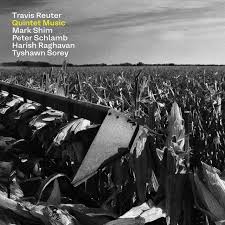
  • Quintet Music by Travis Reuter

    Quintet Music by Travis Reuter

    Review of Quintet Music by Travis Reuter
    By Max Millar

    Guitarist Travis Reuter’s Quintet Music offers a striking blend of intellectual rigor and emotive depth that speaks directly to the heart of contemporary jazz. With this debut album, Reuter steps into a realm where composition and improvisation coexist as one fluid, multifaceted entity. Drawing on a lineage of forward-thinking jazz guitarists—primarily the harmonic ingenuity of Pat Metheny and the angularity of modernists like Bill Frisell and Kurt Rosenwinkel—Reuter has carved out a sound that is undeniably his own, marked by its bold rhythmic exploration and dynamic arrangements.

    From the opening track, “Elephant in the Room,” Reuter’s quintet establishes an immediately identifiable sound. His guitar tone is crisp, with a clean, direct presence, a clear voice amidst a sea of textures laid down by saxophonist Jon Irabagon, trumpeter Jonathan Finlayson, bassist Michael Formanek, and drummer Tyshawn Sorey. The group’s interplay is a masterclass in cohesion—rhythmic tension and release, harmonic unpredictability, and, above all, a palpable sense of urgency in every note.

    The compositional depth of Quintet Music cannot be overstated. Reuter’s pieces—such as the sprawling, multi-sectioned “Scale of the Universe” and the quirky, dissonant “Insomnia Waltz”—both challenge and reward the listener. These are not just songs but explorations, journeys that unfold with dramatic pauses, sudden shifts, and long, winding builds. The harmonic landscape is vast but never overwhelming, thanks to Reuter’s meticulous structuring and the singular chemistry of his band. His charts, though intricate, leave plenty of room for the kind of spontaneous, real-time improvisation that marks the best of modern jazz.

    The inclusion of Irabagon and Finlayson adds a dynamic layer of sonic complexity. Irabagon’s tenor saxophone, with its clear, piercing timbre, contrasts nicely with Reuter’s more restrained yet urgent guitar playing. Both musicians frequently engage in two-way dialogues, their voices interweaving like threads in an ever-evolving tapestry. Finlayson’s trumpet work, with its sharp articulation and commanding phrasing, serves as a perfect foil, particularly in the more driving sections of tracks like “Trio of Stars.” Sorey, an artist of immense capacity, proves himself to be the heartbeat of this ensemble, propelling the music forward with his ever-changing, elastic rhythms, while Formanek’s bass adds an additional layer of grounding complexity.

    What stands out about Quintet Music is not just its structural ambition, but the emotional range it traverses. Reuter’s ability to balance intellect with heart is perhaps his most striking feature. This is not “heady” music in the sense that it distances itself from emotional resonance; on the contrary, it invites you to feel just as much as think. In tracks like “One Step Ahead,” the quintet delivers a perfect balance between complexity and groove, creating space for each voice to be heard while maintaining a cohesive narrative.

    Sorey’s work as a drummer cannot go unmentioned. On “The Quiet Revolution,” his ability to subtly shift rhythms and use space as an active force in the composition creates an atmosphere of suspended tension, allowing the other musicians the room to breathe. Formanek’s bass, often acting as the music’s connective tissue, roots the ensemble in a pulse that feels ever-present but never overbearing. The collective mastery of these musicians is impressive, but it’s Reuter’s careful, considered leadership that holds it all together.

    In sum, Quintet Music is a remarkable debut that will undoubtedly serve as a touchstone for Travis Reuter’s career. He’s a guitarist of great technical prowess and even greater imagination, forging a path forward for the guitar in contemporary jazz. This record suggests that Reuter is an artist who understands the importance of both tradition and innovation—merging the intellect of the modern jazz lexicon with the heart of a storyteller. It is cerebral but warm, challenging yet deeply rewarding. For anyone invested in where jazz is headed, this is a statement that shouldn’t be missed.

  • London’s top 10 Jazz Venues

    London is home to a thriving jazz scene, with a variety of venues offering unique atmospheres and histories. Here’s a list of 10 of the best jazz venues in the city, highlighting their individual character and the vibe they provide:

    1. Ronnie Scott’s Jazz Club

    • History: Opened in 1959 by saxophonist Ronnie Scott, this iconic venue is a staple of London’s jazz scene. It has hosted legendary artists such as Ella Fitzgerald, Miles Davis, and the Rolling Stones.
    • Vibe: Intimate and legendary. The dimly lit club provides a cozy yet upscale atmosphere, making it the place for serious jazz enthusiasts and casual listeners alike. Expect world-class performances in a stylish setting with a touch of old-school glamour.
    • Atmosphere: Sophisticated yet relaxed, with a mix of loyal jazz fans and tourists looking to experience a piece of jazz history.

    2. The Jazz Cafe

    • History: Located in Camden, The Jazz Cafe opened in 1990 and quickly became a hotspot for live music lovers. It blends jazz, soul, funk, and world music, with performances from artists like Amy Winehouse and Erykah Badu.
    • Vibe: Vibrant and eclectic. It’s a lively venue where the energy is high and the crowd diverse. It’s more of a “club” vibe, with a focus on music and dancing, while still maintaining a dedication to jazz.
    • Atmosphere: Casual and energetic, it’s perfect for a night of dancing and enjoying contemporary jazz influences.

    3. The 606 Club

    • History: Founded in 1976, The 606 Club in Chelsea is a longstanding venue with a rich tradition of live jazz. The club has a reputation for presenting top-notch musicians in an intimate setting.
    • Vibe: Cozy and relaxed. It’s one of London’s hidden gems, featuring top-tier jazz musicians in a comfortable, low-key atmosphere.
    • Atmosphere: Warm, close-knit, and friendly, with tables surrounding the stage, creating a sense of connection between performers and the audience.

    4. PizzaExpress Jazz Club (Soho)

    • History: This iconic venue, located in the heart of Soho, has been part of the PizzaExpress brand since the 1970s. It’s hosted jazz legends such as Jamie Cullum, Wynton Marsalis, and Christian McBride.
    • Vibe: Laid-back and accessible. This venue combines great food with live jazz, offering a relaxed environment where you can enjoy a meal while listening to the music.
    • Atmosphere: Casual yet intimate. It’s a more informal experience compared to larger venues, with an emphasis on enjoyment and good company.

    5. Vortex Jazz Club

    • History: Founded in 1989 in Dalston, Vortex has a rich legacy in supporting both avant-garde and traditional jazz. It is known for being a hub for experimental and cutting-edge performances.
    • Vibe: Experimental and artistic. The venue has a slightly gritty feel, offering a more alternative jazz experience that attracts a passionate, local crowd interested in progressive jazz.
    • Atmosphere: Intimate and slightly raw, creating a more immersive, personal connection to the music.

    6. King’s Place

    • History: King’s Place opened in 2008 as a multidisciplinary arts venue and has quickly become a leader in London’s classical and jazz music scenes. It offers a modern, spacious environment for performances of all genres.
    • Vibe: Refined and modern. It attracts a more mature audience with its stylish, state-of-the-art acoustics and an emphasis on high-quality performances.
    • Atmosphere: Calm and sophisticated, making it ideal for a more relaxed evening of listening to jazz in a concert hall-style venue.

    7. The Bull’s Head

    • History: Located in Barnes, The Bull’s Head has been a popular jazz venue since the 1960s, offering live jazz nightly and hosting both local and international artists. It has a reputation for great acoustics and a loyal following.
    • Vibe: Traditional and unpretentious. This is a pub with an intimate, homely feel, where jazz blends with the relaxed atmosphere of a local watering hole.
    • Atmosphere: Welcoming and down-to-earth, with a mix of regulars and newcomers enjoying the music in a laid-back pub setting.

    8. Cadogan Hall

    • History: A former Methodist church, Cadogan Hall has become a prominent venue for classical music, jazz, and other genres since it opened in 2004. It is home to the London Chamber Orchestra but also hosts jazz performances, including a popular series featuring high-profile artists.
    • Vibe: Grand and elegant. With its classical music history and high-quality acoustics, it offers a more formal, concert-like experience compared to smaller venues.
    • Atmosphere: Cultured and serene, with an emphasis on professional-level performances in a beautiful, intimate hall.

    9. Royal Festival Hall

    • History: As part of the Southbank Centre, Royal Festival Hall is one of the UK’s most important cultural venues, hosting a variety of jazz performances since its opening in 1951. It is known for its wide range of jazz, from classic to contemporary.
    • Vibe: Majestic and expansive. This large venue offers a formal yet welcoming environment where jazz performances are held alongside other major events in the arts.
    • Atmosphere: Sophisticated and often lively, with a large and diverse crowd that creates an energetic yet polished experience.

    10. Southbank Centre (Purcell Room)

    • History: The Purcell Room, part of the Southbank Centre, is known for its exceptional acoustics and intimate vibe. It regularly hosts jazz performances, featuring both established and emerging artists.
    • Vibe: Intimate and artistic. With its small seating capacity, the Purcell Room feels like a private concert, offering an up-close experience with some of the most talented jazz musicians.
    • Atmosphere: Quiet and respectful, ideal for those who appreciate a more focused and immersive listening experience.

    Key Differences in Vibe and Atmosphere:

    • Intimate Venues (e.g., Ronnie Scott’s, 606 Club, Vortex Jazz Club): These offer a personal connection with the artists, often in cozy, small settings where the audience is close to the stage. The vibe tends to be warm, informal, and focused on the performance.
    • Larger Venues (e.g., Royal Festival Hall, King’s Place, Cadogan Hall): These provide a more formal atmosphere with top-tier acoustics and larger audiences. They are ideal for those who want a grander, concert-style experience.
    • Eclectic/Alternative Spaces (e.g., The Jazz Cafe, Vortex Jazz Club): These venues embrace a more diverse approach to music, offering jazz alongside other genres. The atmosphere is more relaxed, and the crowd is often more varied.
    • Casual, Pub-Like Venues (e.g., The Bull’s Head, PizzaExpress Jazz Club): These offer a blend of great food and live music, with a more laid-back, communal vibe.

    Each venue offers a unique angle on jazz, from intimate nights with local artists to grand performances by world-renowned musicians.

  • Max Richter – Glasgow Concert Hall 24/10/2024

    Max Richter – Glasgow Concert Hall 24/10/2024

    Max Richter’s concert at the Glasgow Royal Concert Hall on October 24, 2024, was an ethereal and emotionally resonant experience that showcased the best of his contemporary classical mastery. Performing in front of a full house, Richter brought his signature blend of minimalist symphonies and ambient electronic textures to life with a captivating intensity.

    The program spanned a selection of Richter’s most beloved works, including pieces from Sleep and The Blue Notebooks, with the audience enveloped by his hauntingly beautiful orchestrations. As ever, Richter’s music wove a delicate balance between deep introspection and profound cinematic vastness, delivering an evocative journey. His rich, layered compositions, often sweeping across atmospheric soundscapes, seemed to transport the audience into a dreamlike state.

    A standout moment was the live performance of “On the Nature of Daylight,” which resonated deeply with listeners, combining strings and electronic elements to create a soaring, melancholic atmosphere that had the audience visibly moved. The performance was underscored by Richter’s insightful commentary, which added a personal layer to his work, enriching the experience and creating a unique connection between the composer and the audience.

    Richter’s collaboration with his ensemble—featuring exceptional string players and an array of electronic accompaniments—was as tight as ever, creating a seamless integration of traditional classical instrumentation and modern, ambient sounds. This combination allowed for moments of quiet introspection, followed by explosive, layered crescendos that left the room pulsing with emotion.

    Despite the somewhat understated presentation—Richter is not one for grandiosity—the performance had an immense emotional weight, capturing the essence of his work: deeply personal, yet universally resonant. As the concert closed with the majestic strains of Vivaldi’s Recomposed, the audience responded with rapturous applause, a reflection of how thoroughly Richter’s music had transported them.

    Overall, Max Richter’s October performance in Glasgow exemplified why he remains one of the most prominent figures in contemporary classical music. It was a night of both subtle beauty and overwhelming emotional power, reaffirming his ability to communicate profound narratives through sound. For those who seek a deeply moving and intellectually stimulating musical experience, Richter’s concerts continue to be an unmissable event.

  • Glasgow Jazz: A Revolution in Four-Four Time

    Glasgow Jazz: A Revolution in Four-Four Time

    By Max Millar.

    Glasgow, the old industrial lion of the Clyde, once rumbled with the clang of shipyards and the murmur of political ferment. Now, its streets hum with a new rhythm, a syncopated heartbeat that speaks of the future while wearing the past like a sharp-cut suit. Jazz—Glasgow’s jazz—has found itself reborn, slinking out of smoky basements and into the wide arms of a younger, more eclectic audience. It is a revolution not with fists but with brass, an uprising led by the cool and the clever, riding the wild, dissonant wave of cultural metamorphosis.

    In the days of yore, jazz in Glasgow was an affair of hushed reverence. The faithful congregated in shadowy clubs like The Blue Arrow and The Jazz Bar, soaking in the alchemy of bebop and blues. The audience was loyal but narrow—a collection of devotees, aficionados, and the occasional wayward wanderer. The music was brilliant, yes, but it stood apart, aloof, unwilling to barter with the larger world.

    Then came the disruption. Call it the digital age or the multicultural melting pot; whatever it was, it cracked the walls of the city’s sonic temple. Suddenly, jazz found itself tangled with hip-hop, neo-soul, electronica, and even punk. The younger generation, born into a world that refused to segregate its sounds, took this once-sacred genre and made it their own. They did not just respect jazz; they reimagined it.

    At the heart of this transformation lies the city’s eclectic venues and collectives—The Hug and Pint, Mono, and the Glad Café, where beer flows as freely as the sax solos. These are places where the distinction between performer and audience dissolves, where musicians dressed in thrift-store chic create music not for the ivory-towered critic but for the tattooed, street-smart, and social-media-savvy crowd. This is not your grandfather’s jazz scene; it is a kaleidoscope of sound and style, as accessible as it is avant-garde.

    Take Fergus McCreadie, a young pianist who wields the Scottish folk tradition like a brush, painting jazz with the melancholy and fire of the Highlands. Or consider Corto.alto, a genre-blurring ensemble that marries brass with the pulse of contemporary beats. These musicians are architects of a new sonic Glasgow, building bridges between the old and the new, between Coltrane and Kendrick, between the ivory keys and the digital pads.

    The audiences are no longer an exclusive club; they are a tribe, as diverse as the music itself. Students in oversized blazers sit beside weathered veterans in flat caps. There are DJs, skateboarders, activists, and tech start-up founders. They do not clap politely—they cheer, they stomp, they tweet. For them, jazz is not an artifact; it is an atmosphere, a living thing.

    And so, the question arises: where does this leave the future of Glasgow jazz? If one thing is certain, it is that the city will not stand still. The next frontier is likely to be even more experimental, a wild fusion of the virtual and the visceral. AI-driven improvisation? Jazz festivals set in digital metaverses? Or perhaps a return to primal simplicity, with drum circles in Queen’s Park and unamplified brass echoing through the Kelvin Walkway.

    Whatever the shape, the sound of Glasgow jazz will not fade. It will evolve, adapt, and thrive, as stubborn and as soulful as the city itself. In the meantime, the music continues, a little louder now, a little wilder, its audience growing by the day. Jazz is dead, they used to say. Not here. Not in Glasgow. This is not a requiem; this is a rebirth.

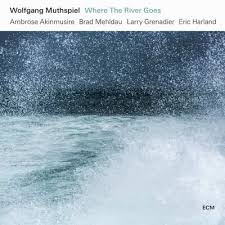
  • Wolfgang Muthspiel – Where the River Goes

    Wolfgang Muthspiel – Where the River Goes

    Wolfgang Muthspiel – Where the River Goes
    ECM Records
    ★★★★☆
    Wolfgang Muthspiel’s Where the River Goes is a spellbinding sequel to his 2016 release, Rising Grace, and once again, the Austrian guitarist gathers a dream team of collaborators—Brad Mehldau (piano), Ambrose Akinmusire (trumpet), Larry Grenadier (bass), and Eric Harland (drums). These are musicians who need little introduction, and Muthspiel’s compositions feel almost tailor-made to their abilities. Together, they conjure a sonic landscape of remarkable depth, restraint, and fluidity, where every note feels as if it’s been plucked directly from the river of time.
    The album opens with the title track, “Where the River Goes,” a piece that flows with a sense of quiet inevitability. Muthspiel’s nylon-stringed guitar work is understated, threading through Mehldau’s prismatic harmonies and Akinmusire’s breathy, introspective lines. The group takes its time here—this is music that breathes, a slow exhale in an often hyperventilating world.
    Tracks like “For Dancers” and “Panorama” are more rhythmically charged, showcasing the elasticity of Harland’s drumming and Grenadier’s lithe basslines. Harland, in particular, shapes the music with a fluid sense of pulse, creating moments that seem both anchored and untethered, much like water itself.
    Akinmusire shines on “Clearing,” delivering a trumpet performance that is at once mournful and defiant, his tone bending and twisting like light refracted through rippling water. Mehldau’s contribution is equally luminous, his solos weaving dense, harmonic threads that reward close listening. There is a conversational quality to his interplay with Muthspiel; their lines overlap and interlace like old friends finishing each other’s sentences.
    If there’s a criticism to be made, it’s that the album’s commitment to subtlety occasionally risks veering into homogeneity. The dynamics are nuanced, yes, but there are moments where the listener might yearn for more pronounced contrasts or a sudden burst of energy. That said, this is clearly by design—Muthspiel’s approach here is more about creating a cohesive atmosphere than delivering fireworks.
    The closer, “One Day My Prince Was Gone,” is a wistful and haunting finale, a meditation on impermanence that lingers long after the final note fades. It encapsulates the ethos of the album: a celebration of the journey, not the destination, of the spaces between notes as much as the notes themselves.
    Where the River Goes is quintessential ECM: pristine production, contemplative compositions, and performances that balance precision with improvisational freedom. It’s an album that invites the listener to slow down, to drift with its currents, and to discover its quiet revelations on repeated listens. Muthspiel has not just charted where the river goes—he’s shown us how to follow it with grace.

  • Two Tenor Titans

    Two Tenor Titans

    Chris Potter and Mark Turner: Two Titans of the Tenor Saxophone

    When discussing modern jazz saxophone, the names Chris Potter and Mark Turner loom large, their styles as distinct as their paths to prominence. Both emerged in the 1990s and quickly established themselves as paragons of technical mastery and creative ingenuity. Yet, their approaches to improvisation, their artistic priorities, and the influences they’ve passed on to subsequent generations could hardly be more different. Together, they’ve reshaped the landscape of jazz saxophone, setting a dual template for innovation that continues to inspire younger players.

    Chris Potter: Virtuosity and the Power of the Line

    Chris Potter is often described as a prodigy-turned-maestro. By the time he joined Red Rodney’s band at 18, his immense technical facility was already drawing attention. Potter’s playing is marked by a seemingly endless flow of ideas, a relentless pursuit of motion and development. His lines are complex but grounded in the jazz tradition; one can hear echoes of Sonny Rollins’ muscular phrasing, Coltrane’s sheets of sound, and Michael Brecker’s virtuosic articulation.

    Potter’s improvisational style prioritizes momentum. His solos are like journeys through dense harmonic landscapes, building tension with intricate chromaticism and cascading arpeggios. He uses odd meters and shifting rhythms with ease, as heard on albums like Gratitude and The Sirens. His technical mastery allows him to execute ideas with astonishing clarity, often leaving listeners marveling at the sheer physicality of his playing.

    This combination of tradition and forward-thinking virtuosity has had a profound influence on younger saxophonists. Musicians like Donny McCaslin, Melissa Aldana, and Ben van Gelder have clearly absorbed Potter’s ability to fuse technical brilliance with emotional intensity. His command of extended techniques—overtones, multiphonics, and altissimo—is now almost expected of the modern saxophonist, thanks in large part to his example.

    Mark Turner: Intellectualism and the Geometry of Sound

    Mark Turner occupies a contrasting space. While Potter’s playing might evoke a roaring river, Turner’s style is more akin to a Zen garden—spare, meditative, yet deeply intricate. Turner’s sound is rooted in the airy, pianistic approach of Warne Marsh and Lee Konitz, but he pushes this lineage into new conceptual territory.

    Turner’s improvisations are architectural. His use of wide intervals, counterpoint, and harmonic abstraction creates a sense of verticality; the listener feels as though they’re navigating a vast, open structure rather than a linear narrative. On albums like Ballad Session or Lathe of Heaven, his tone—soft, almost dry—offers a sharp contrast to Potter’s robust sound. Turner is less interested in the overtly virtuosic than in developing thematic material with precision and patience. His improvisations often feel like intellectual puzzles, where the resolution emerges gradually and with great subtlety.

    Turner’s influence is perhaps more niche but no less profound. Players like Ben Wendel, Walter Smith III, and Logan Richardson have adopted elements of his intervallic approach, his interest in non-standard chord progressions, and his commitment to restraint. His refusal to rely on flashiness has encouraged a generation to explore depth over spectacle, making him a beacon for those who value conceptual rigor.

    Two Paths, One Legacy

    Comparing Potter and Turner highlights a fascinating dichotomy in modern jazz. Potter’s approach is rooted in kinetic energy, in the momentum of the line and the thrill of harmonic complexity. Turner, by contrast, seeks clarity and space, prioritizing thematic development and harmonic exploration. Both players are firmly connected to the jazz lineage—Potter through Coltrane and Brecker, Turner through Marsh and Konitz—but they’ve extended it in ways that have fundamentally altered how the tenor saxophone is played and conceived.

    The dual influence of Potter and Turner on subsequent generations is undeniable. For young saxophonists today, these two figures represent complementary ideals: the technical brilliance and drive of Potter, the intellectual depth and abstraction of Turner. It’s no surprise that many contemporary players aim to synthesize elements of both. Ben Wendel, for example, draws on Potter’s rhythmic energy and Turner’s contrapuntal sensibility, while Walter Smith III balances thematic development with virtuosic flourishes.

    Their Own Influences

    It’s worth noting how Potter and Turner themselves arrived at their approaches. Potter’s influences—Coltrane, Rollins, Brecker—are evident, but his interest in other genres, from funk to folk, has broadened his palette. Albums like Underground showcase his willingness to incorporate electric instruments and groove-based textures, echoing Brecker’s experiments with fusion but with a more contemporary twist.

    Turner, on the other hand, has often cited Marsh and Konitz as foundational influences, but his fascination with classical music—particularly the contrapuntal works of Bach—sets him apart. His compositions often resemble chamber pieces, blurring the line between jazz and contemporary classical music.

    Two Poles of Modern Saxophone

    Chris Potter and Mark Turner have charted two poles of the modern saxophone, each offering a model of what jazz can be in the 21st century. Potter’s athleticism and harmonic daring are a reminder of the power of sheer momentum and technical command, while Turner’s introspection and precision point toward the value of patience and abstraction. The influence of these two titans is everywhere in contemporary jazz, their contrasting approaches serving as a dual compass for the current and future generations of players. Whether through the explosive energy of Potter or the quiet profundity of Turner, the tenor saxophone continues to speak in new and compelling voices, thanks in no small part to these two remarkable musicians.

  • An Interview with Brad Mehldau

    An Interview with Brad Mehldau

    by Max Millar

    Max Millar: Brad, first off, let me just say what an absolute honor it is to sit down with you. Your playing has shaped how I approach the piano, and I know countless others feel the same way. Thanks for taking the time to talk.

    Brad Mehldau: Thanks, Max. I’m glad the music has resonated with you. That means a lot.


    Max Millar: Let’s dive in. One thing that always strikes me about your playing is your ability to layer textures—like how you weave independent melodies in your right and left hands. I think of pieces like your take on Radiohead’s Exit Music (For a Film) or your improvisations on Blackbird. How did that kind of contrapuntal approach develop?

    Brad Mehldau: It goes back to my early fascination with Bach. I’ve always been drawn to the way he could make two or three voices speak independently but still interact in a meaningful way. When I’m improvising, I’m often thinking of counterpoint—not in a strict, academic sense, but as a way to let the left hand have its own conversation while the right hand explores something else. It’s like two characters in a dialogue.

    But it’s also emotional. With Exit Music, for example, the goal was to capture that haunting melancholy, and counterpoint helps create that tension. One voice pulls you in one direction, the other in another—there’s this unresolved feeling that mirrors the song’s narrative.


    Max Millar: That’s fascinating. And when it comes to harmony, your reharmonizations are legendary. I’ve heard people describe your chords as “classical meets jazz meets pop.” What’s your process when reimagining a tune harmonically?

    Brad Mehldau: Reharmonization is where I let my instincts take over. When I hear a melody, I ask myself: What else could this melody be saying? A simple diatonic progression might work beautifully, but shifting to something chromatic or unexpected can reveal a different side of the tune.

    Take Blackbird, for instance. It’s a beautiful melody that sits perfectly over a standard folk progression, but if you add, say, a diminished chord or imply a Lydian sound, suddenly it’s a little more unsettled, even bittersweet. I think about tension and release—how the harmony can heighten or subvert what the melody is already doing.


    Max Millar: That idea of tension and release comes up in your use of rhythm too. The way you’ll play with time, stretching or compressing phrases, can be so breathtaking. How do you approach that sense of rubato and rhythmic flexibility?

    Brad Mehldau: That’s something I’ve worked on for a long time. It’s about listening and trust. When you’re playing in a trio, for example, you have to trust that the bass and drums will hold the pulse, even if you’re floating above it. And vice versa—they need to trust you to eventually resolve back into the groove.

    But rubato isn’t just about freedom. It’s about intention. If I’m stretching a phrase, I want it to feel natural, as if the melody needs to take that breath. You don’t want it to feel like a gimmick. Keith Jarrett does this masterfully—he’s always breathing with the music, even when he’s pushing it to its limits.


    Max Millar: Speaking of Jarrett, your solo playing often gets compared to his—particularly in how you build improvisations so organically. How much of his influence do you carry with you, and how do you carve out your own space in that lineage?

    Brad Mehldau: Jarrett is, without a doubt, a massive influence. His solo concerts are like these vast emotional landscapes where every idea feels inevitable, like it couldn’t have gone any other way. That’s something I aspire to—letting the music unfold naturally, without forcing it.

    But I also think about what I can bring to the table. For me, it’s about weaving in the other influences I’ve absorbed, whether it’s Radiohead, Nick Drake, Brahms, or Coltrane. Those elements are part of my personal story, and they help shape the narrative I’m telling in the moment.


    Max Millar: Your incorporation of pop and rock influences has been so important for bridging jazz with a wider audience. What draws you to artists like Radiohead or Nick Drake, and how do you translate their music into your language?

    Brad Mehldau: I’m drawn to music that feels honest, whether it’s jazz, classical, or rock. Radiohead and Nick Drake, in particular, have this emotional vulnerability that resonates with me. It’s not about genre—it’s about finding the humanity in the music.

    When I arrange a pop tune, I’m not trying to make it “jazzy.” I’m trying to preserve what makes it special while letting it breathe in a different way. With Radiohead’s Everything in Its Right Place, for instance, I kept that hypnotic, looping quality but added improvisational elements to create a dialogue with the original.


    Max Millar: Let’s talk about younger pianists. Your influence on players like Gerald Clayton, Tigran Hamasyan, and Aaron Parks is undeniable. What do you hope the next generation takes from your work?

    Brad Mehldau: I hope they take the idea that jazz is a living, evolving art form. It’s about tradition, yes, but also about curiosity and exploration. I’ve always tried to approach music with an open mind, whether it’s diving into the American songbook or exploring contemporary music.

    And I hope they see that it’s okay to let your personality shine through. Jazz isn’t about fitting into a box; it’s about expressing who you are in the most honest way possible.


    Max Millar: One last question, Brad. After everything you’ve accomplished, what still excites you about making music?

    Brad Mehldau: The unknown. Every time I sit at the piano, there’s the potential to discover something new. Music is infinite, and no matter how much you learn, there’s always more to explore. That sense of possibility—that’s what keeps me coming back.

    Max Millar: Beautifully said. Thank you, Brad, for sharing your insights. This has been a dream come true for me.

    Brad Mehldau: My pleasure, Max. Keep playing, and keep listening. That’s what it’s all about.